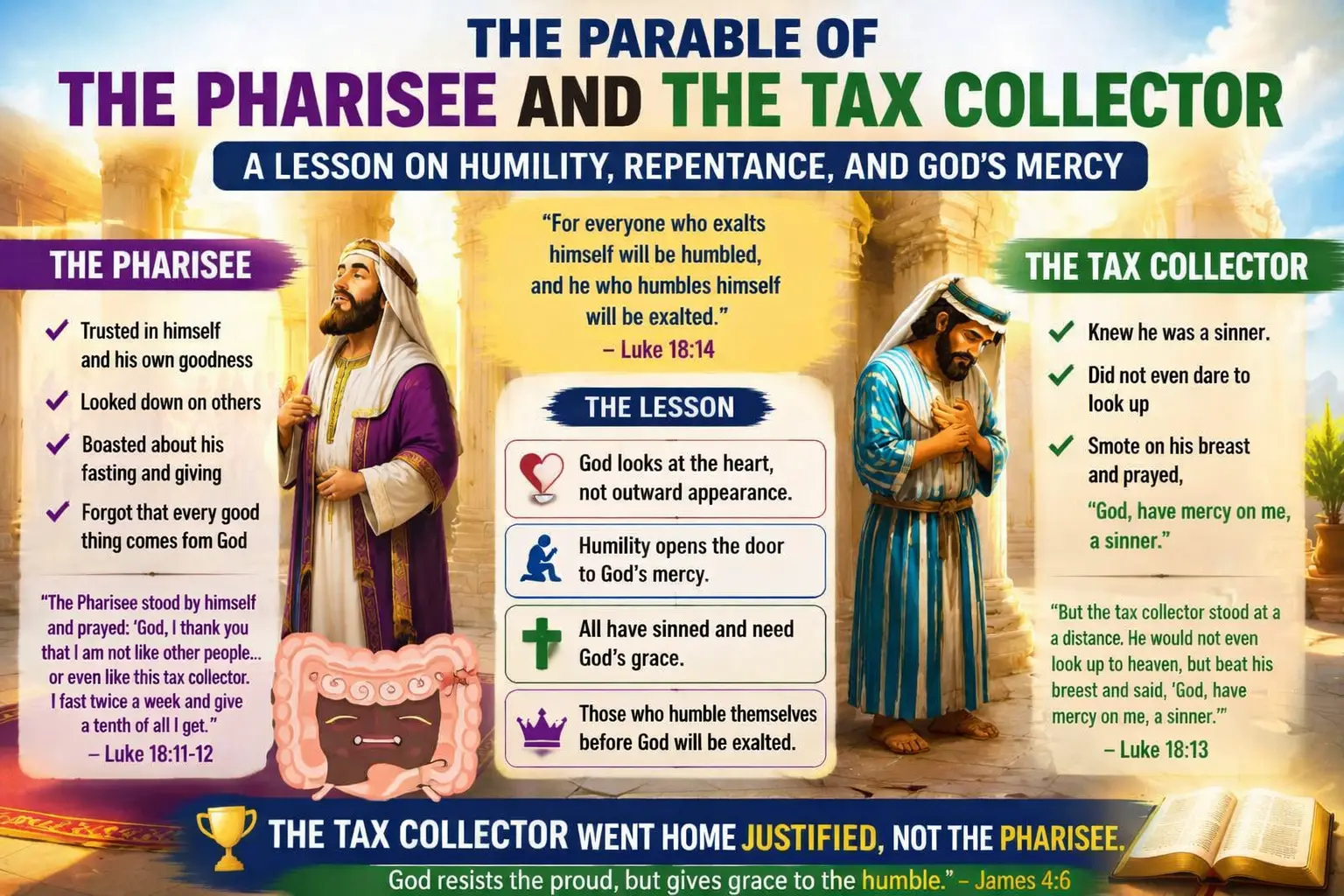
It is a very interesting parable Jesus gave us. We need to understand its meaning. Although we can never understand the Bible fully, perhaps God can give us some insight into the lessons we can learn and the meaning of the parable of the Pharisee and the tax collector. We saw in the last article that Pharisees are not like Jesus.
A Pharisee thinks he is a good person and can gain heaven through his own merit. A Pharisee thinks that there is great goodness in himself. A Pharisee thinks that what he does is enough to gain heaven, even as he worships God. Deep down, he believes that he does not need God. Let us see if we can learn some of the meaning of the parable of the Pharisee and the tax collector.
The Parable of the Pharisee and the Tax Collector
LK 18:9 To some who were confident of their own righteousness and looked down on everyone else, Jesus told this parable:
This verse, the Bible says, is directed to a certain class of people. The Bible says they are confident that they are good people. Deep down, they believe they do not need God. Yet they worship God, but they love themselves more than God. The meaning of the parable of the Pharisee and the tax collector is a comparison between someone who feels deep down their sinful nature and someone who is blind to his own condition and feels like he is a good person.
The Pharisee in this parable likes to look down on others. He does not see his own condition. Jesus speaks of Laodicea as being blind to their own condition. They think they are good and in favor with God, and they feel like they do not need God and His righteousness. The Pharisee in this story is similar; he feels like he has enough righteousness to not need any from God.
The meaning of the parable of the Pharisee and the tax collector is very important as it tells us how wicked our hearts can be—not only to point the finger at others but also to not see our own defects of character. It is a twofold problem that only God can fix. When one spends time looking at what others are doing, they often judge wrongly and come to wrong conclusions. It is as if they cannot see their own wicked condition and think they are good when they are not.
Then, how can they judge others correctly? Our judgment is very important. It is not because we judge that we are right. We need God’s wisdom to correctly discern things. Even then, our understanding is darkened, and only God, who is very merciful, can judge correctly.
We should not even judge, the Bible says, as we have enough problems of our own to fix in our characters to spend time looking at what others are doing. To find the meaning of the parable of the Pharisee and the tax collector, we need to see that God judges very differently than the world. The world thinks those who outwardly follow all requirements are good people. But God can see the heart: the selfishness, the pride, the unloving, unkind spirit, the deception, the dishonesty, and the unbelief. These things are what make someone the opposite of who Jesus is. Jesus is meek and lowly.
LK 18:10 “Two men went up to the temple to pray, one a Pharisee and the other a tax collector.”
Two men went into the temple; this is the state of the modern church. Part of the church is Pharisee, and part of the church is tax collector. Some think they are good and holy when they are all wrong and defiled. The other part feels their own sinful condition and seeks God for righteousness, understanding that they have no righteousness of their own.
LK 18:11 The Pharisee stood by himself and prayed: ‘God, I thank you that I am not like other people—robbers, evildoers, adulterers—or even like this tax collector.’
The Pharisee judged according to society and not according to the Bible. This is why he thought himself good; he thought that following society’s rules and fashions made him a good person. Jesus said:
MT 5:20 For I say unto you, That except your righteousness shall exceed the righteousness of the scribes and Pharisees, ye shall in no case enter into the kingdom of heaven.
Two kinds of righteousness are found in this verse: the righteousness of the Pharisees (or of society) and the righteousness of God. These are completely different. First of all, Pharisees think that because they follow rules, they become good people. Following rules never changed the heart. We have to obey earthly rules, but we need to understand that God has a higher standard. It is very acceptable in this world to be proud and arrogant. For God, this is an abomination. It is very offensive for God to see someone who thinks that what He gives them as a gift—that person acts as if they were God and gave themselves the blessings.
This is one of the reasons Pharisees think they are good. It is because they compare themselves to this world’s standards rather than comparing themselves to the Bible. Jesus says no one can enter heaven if their notion of good and evil comes from this society alone. This society does not teach people to turn the other cheek. It does not teach people to not seek the first place. In fact, the opposite is true. In this society, forgiveness is not the norm. In this society, loving and expecting something in return is very fashionable. The Bible says that this is selfishness.
LK 18:12 ‘I fast twice a week and give a tenth of all I get.’
This Pharisee did works, quite a lot. But did those works receive the approval of God? No. The Pharisee gave money to the poor, but the problem was that deep down, he thought he did it from his own power, not understanding that any good impulse in our hearts comes from God alone. Also, another meaning of the parable of the Pharisee and the tax collector is that the Pharisee believed those works were enough for him to gain salvation.
Doing good is what matters, but actions are not who we are. Who we are is what shall be saved in heaven. Someone can do a lot of good deeds but still be selfish, arrogant, and unloving. It is true that we can judge someone by their works, but it is not always accurate, as someone can do things because of his friends, to be seen by people, to be admired, and to gain heaven. This last motive is also a selfish motive.
The person who works to gain heaven also has ulterior motives, and the works are not done because they love the person of God. They work to benefit themselves. They work to avoid going to hell. Avoiding going to hell is not a pure motive. It is better than the one who does not care if they go to hell, but works are not for you to gain salvation. Works should come from motive; you bless others because you love God.
To understand the meaning of the parable of the Pharisee and the tax collector: both groups work. One group works to save themselves by selfish motives. The other group believes they are saved by grace. They believe they do not have any righteousness. Their works are only done because they love God and others.
LK 18:13 “But the tax collector stood at a distance. He would not even look up to heaven, but beat his breast and said, ‘God, have mercy on me, a sinner.’”
This is the right attitude to have; this is the first step for conversion. We can only become converted when we realize that there is nothing good in human beings. That there is not one human being who is good and holy. All our best works are dirty rags. That our tongues are filled with anger, selfishness, control, ulterior motives, manipulation, and deception.
EC 7:20 Surely there is not a righteous man on earth who does good and never sins. RO 3:23 For all have sinned and fall short of the glory of God, RO 3:10 As it is written: “None is righteous, no, not one.”
LK 18:14 “I tell you that this man, rather than the other, went home justified before God. For all those who exalt themselves will be humbled, and those who humble themselves will be exalted.”
We see that this topic of being legalistic or believing that God alone has righteousness comes from pride. This is such an important root of evil that few understand the importance of pride in those who will not enter heaven, and the importance of humility for those who give God all the glory.
The meaning of the parable of the Pharisee and the tax collector tells us that God can judge and He sees our actions, words, and thoughts. God comes to a conclusion after, like in this case, two men enter the church. One thinks he is good; the other one knows he is not good. This parable also teaches us that what men believe and what God believes are total opposites. In this society, many people think that because they believe something, it becomes true. This is a great offense and could be the most important topic. Why?
Because most people today, I believe, have received a power of deception, even the Christian church. Many people believe that because they believe something, it becomes true. Human beings have no power to create truth or decide what truth is. The Pharisee was a churchman, a man respected by society who rules others. The Pharisees were in charge of both state affairs and church matters.
Where does truth come from? Truth comes from God. Only God has truth; Jesus is the truth, and the Bible is the truth. We need to conform ourselves to truth. We can only accept the truth when we are honest. Maybe this Pharisee was not honest, or the light of truth never shone in his heart, but we can know that he believed himself to be good. The Bible tells us that God says the opposite. The Pharisee thought himself to be better than the tax collector. The Bible says that the truth was the opposite of what he believed.
The truth was that the tax collector was justified by God and the Pharisee went home rejected by God. We need to know truth. The Pharisee was not approved because he thought himself to be good. He thought he had righteousness, which only comes from God. He thought he did not need God’s righteousness. He was establishing his own righteousness.
And in his dirty garments, he was rejected. Do you see your own sinfulness, my friend? Do you understand that only God is righteous? Do you understand that unless we ask God every day for His righteousness, we shall be clothed in our dirty rags of our own devising? What would keep you now from asking God to give you His righteousness? Repeat after me:
Father God, please forgive my sins. Give me Your righteousness. Come into my heart. Bless, heal, and prosper me. Give me the desires of my heart. Make me happy. In the name of Jesus, amen.
Leave a Reply