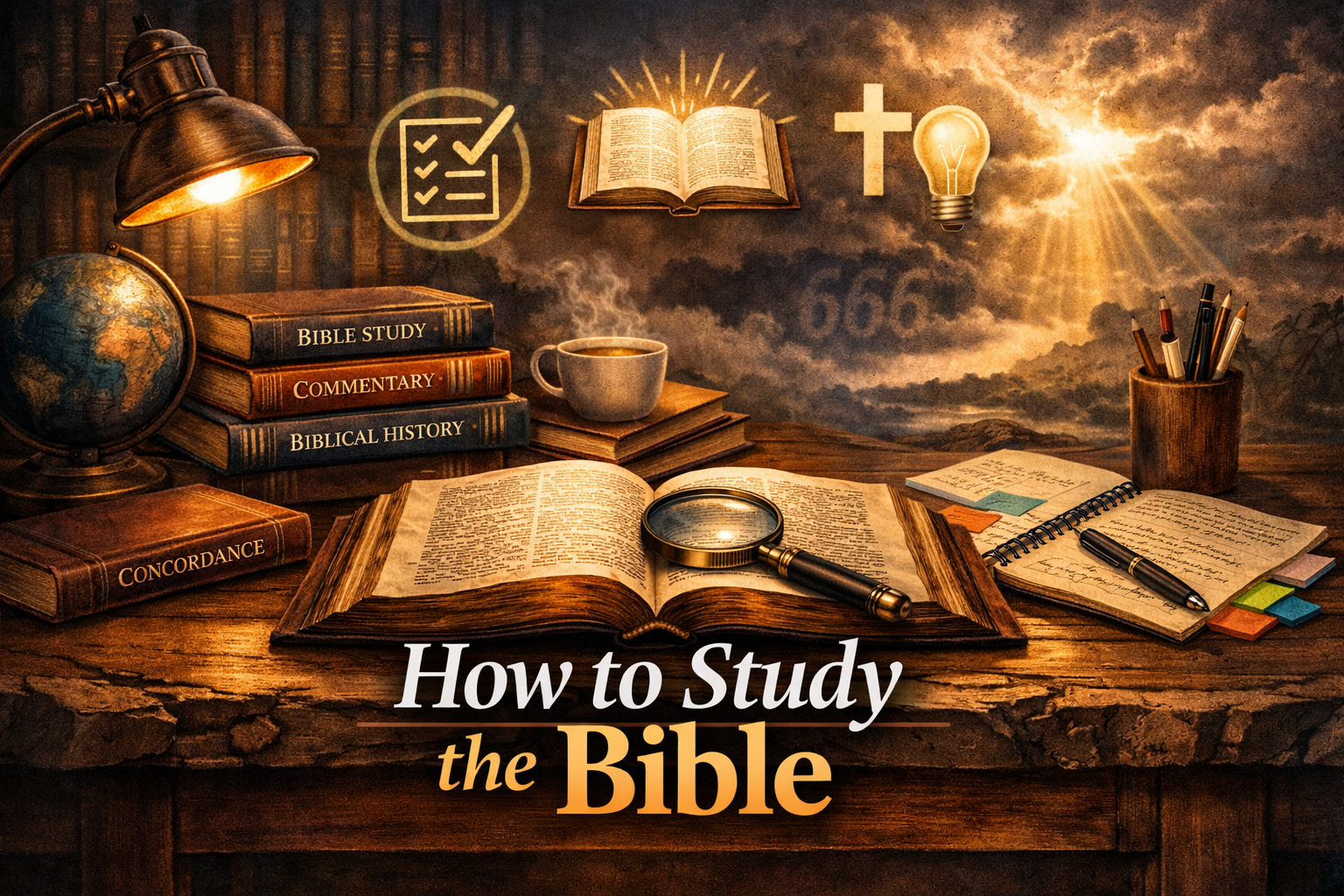
I love helping people learn how to read the Bible from the very beginning. This is incredibly valuable in helping someone get a good start in their Bible reading journey, because this is something many Christians simply never learn how to do. Sadly, many end up embracing false beliefs as a result. I will also share some wonderful Bible study tips that will help you, my new friend in Jesus, grow in the love of God.
In this guide on how to study the Bible, you’ll learn that there is a way to read Scripture without twisting its meaning. There is also a way to read it that improves your retention, and a way to read it that makes it genuinely interesting. How is this done? Let’s find out.
How to Study the Bible: Not Twisting the Bible
Let us be careful never to twist the meaning of Scripture. This is very important, as Peter tells us that we can damage our spiritual life by distorting the Bible and making it say something it never intended. God communicates in a way that is both profound and uniquely His own. As we learn how to study the Bible, we need to remember that God is not a man — His way of speaking is very different from ours.
“For as the heavens are higher than the earth, so are my ways higher than your ways, and my thoughts than your thoughts.” (Isaiah 55:9)
“God is not a man, that he should lie; neither the son of man, that he should repent: hath he said, and shall he not do it? or hath he spoken, and shall he not make it good?” (Numbers 23:19)
So how should we approach learning how to study the Bible? We must read Scripture in context. When we encounter a topic or a verse, we need to trace that theme from Genesis to Revelation. Only then can we arrive at the true meaning of what God is saying — understanding that the Bible can only be properly understood through spiritual discernment. Only God, through His Spirit, can help us understand His Word correctly.
People cannot understand the Bible apart from God. It is the Holy Spirit who helps us grasp Scripture rightly. When we approach the Bible without reverence, we inevitably end up distorting its meaning. We must also remember that God is far wiser than we are. Truly wise people generally take their time before forming judgments — they observe carefully before drawing conclusions. Quick judgment and hasty condemnation are signs of a lack of wisdom.
This means we cannot take a single verse in isolation and declare, “This is what the Bible says.” Instead, my friend, we need to consider the whole of Scripture and, only after careful reflection and study from Genesis to Revelation, arrive at the conclusion that this is truly what the Bible teaches.
How to Study the Bible: Making It Interesting
You can make Bible study genuinely engaging through the use of cross-references. This matters greatly, because if you only read one chapter a day, or a few scattered verses here and there, you may eventually find yourself losing interest. I’ve personally found that the less stress I carry in my life, the more deeply I’m able to study Scripture.
Your time spent learning how to study the Bible should be devoted to digging deep into the Word. It’s valuable to build a broad understanding of Scripture by reading through the whole Bible multiple times, gaining a sense of its overall teaching. But deep study using cross-references will help you go much further still.
You can purchase a Bible that includes built-in cross-references, or use websites such as Bible Gateway or Blue Letter Bible — both excellent tools for deepening your study. For example, if you want to study the meaning of “garden” throughout Scripture, the best approach is to gather every relevant verse from Genesis to Revelation. These websites, a Bible concordance, or a cross-reference Bible can all help you do exactly that.
Take the word “garden,” for instance — you’ll find it connects to Eden, and from there to flowers and imagery throughout Scripture. You might then study the Garden of Eden in depth, followed by the gardens of ancient Babylon, then trace the theme from Genesis all the way to the imagery of gardens in heaven. From there, you could explore the biblical meaning of “waters,” and then move into Jesus’ parables, such as the fig tree, or other related passages.
This is the proper way to approach how to study the Bible. It’s a far more rewarding method, one that helps you truly grasp what Scripture says and explore a topic in real depth. I once heard it said that anyone can become an expert in a subject — a person becomes deeply knowledgeable by going far into one topic, rather than skimming across many. Remaining focused on a single subject for an extended period is what builds true depth of understanding.
How to Study the Bible: Prophecy and the Love of Jesus
Some Christians focus heavily on prophecy or other specific topics, and one real danger in Bible study is becoming absorbed in subjects that, while fascinating and important — such as prophecy — aren’t the central message of Scripture. Bible prophecy can indeed bring revival to churches, yet the most important theme in the Bible remains the love of God and the cross of Jesus. As you learn how to study the Bible, much of your time should be devoted to learning who Jesus truly is, and how to receive His righteousness.
This topic alone — righteousness by faith — is perhaps the most remarkable and essential theme in all of Scripture. We need to understand what true conversion looks like. Simply learning facts about Jesus, the Bible, or prophecy will not, on its own, bring about conversion. True conversion happens when a person realizes that there is nothing inherently good within themselves, and that only God possesses true goodness and righteousness.
“Thy righteousness is like the great mountains; thy judgments are a great deep: O Lord, thou preservest man and beast.” (Psalm 36:6)
This is the topic we should study most deeply, since many Christians have never truly experienced conversion. Simply believing in Jesus intellectually is not, by itself, enough to make someone a true Christian. Genuine conversion happens when a person recognizes that there is nothing inherently good within them. As long as we continue believing our own works carry merit toward our salvation, we remain lost, even while calling ourselves Christians. Even after studying this topic, many will still cling to the belief that they are fundamentally good, and that their works matter for their eternal salvation. This is a serious mistake — no one can be saved through their own works, strength, or righteousness.
“And Jesus answered and spake unto them again by parables, and said, The kingdom of heaven is like unto a certain king, which made a marriage for his son, and sent forth his servants to call them that were bidden to the wedding: and they would not come. Again, he sent forth other servants, saying, Tell them which are bidden, Behold, I have prepared my dinner: my oxen and my fatlings are killed, and all things are ready: come unto the marriage. But they made light of it, and went their ways, one to his farm, another to his merchandise: And the remnant took his servants, and entreated them spitefully, and slew them. But when the king heard thereof, he was wroth: and he sent forth his armies, and destroyed those murderers, and burned up their city. Then saith he to his servants, The wedding is ready, but they which were bidden were not worthy. Go ye therefore into the highways, and as many as ye shall find, bid to the marriage. So those servants went out into the highways, and gathered together all as many as they found, both bad and good: and the wedding was furnished with guests. And when the king came in to see the guests, he saw there a man which had not on a wedding garment: And he saith unto him, Friend, how camest thou in hither not having a wedding garment? And he was speechless. Then said the king to the servants, Bind him hand and foot, and take him away, and cast him into outer darkness, there shall be weeping and gnashing of teeth. For many are called, but few are chosen.” (Matthew 22:1–14)
How to Study the Bible: Seeking God’s Will
When we read the Bible, our ultimate goal is to seek God, to spend time with Him, and for Him to spend time with us — to listen carefully to what He has to say, and to cultivate this remarkable friendship and love with our eternal Creator. If someone wants to know what the Bible truly says, but instead turns first to websites focused on alleged contradictions in Scripture, two things may happen: they will fail to learn what the Bible says about itself, and they may end up disbelieving the Bible before they’ve even truly begun to read it.
Believing something simply on the reputation of a person or a book is very common, but the Bible calls us to judge matters with discernment and truth. Popular opinion is not a reliable measure of truth — Scripture often shows us that the majority can be wrong.
The majority was wrong in the days of Noah. The majority was wrong in the days of Jesus. When you approach how to study the Bible with the goal of discovering what Scripture truly says, rather than what people merely think about it, you give yourself a far greater chance of finding the truth. I hope this has helped you in your journey to know God more deeply through His Word.
Did you know that Jesus loves you? Why not accept Jesus into your heart right now? Repeat after me: Father God, forgive my sins. Give me Your righteousness. Heal and bless me. Help me to walk with You every day, in the name of Jesus. Amen.
EARTHLASTDAY.COM
Leave a Reply