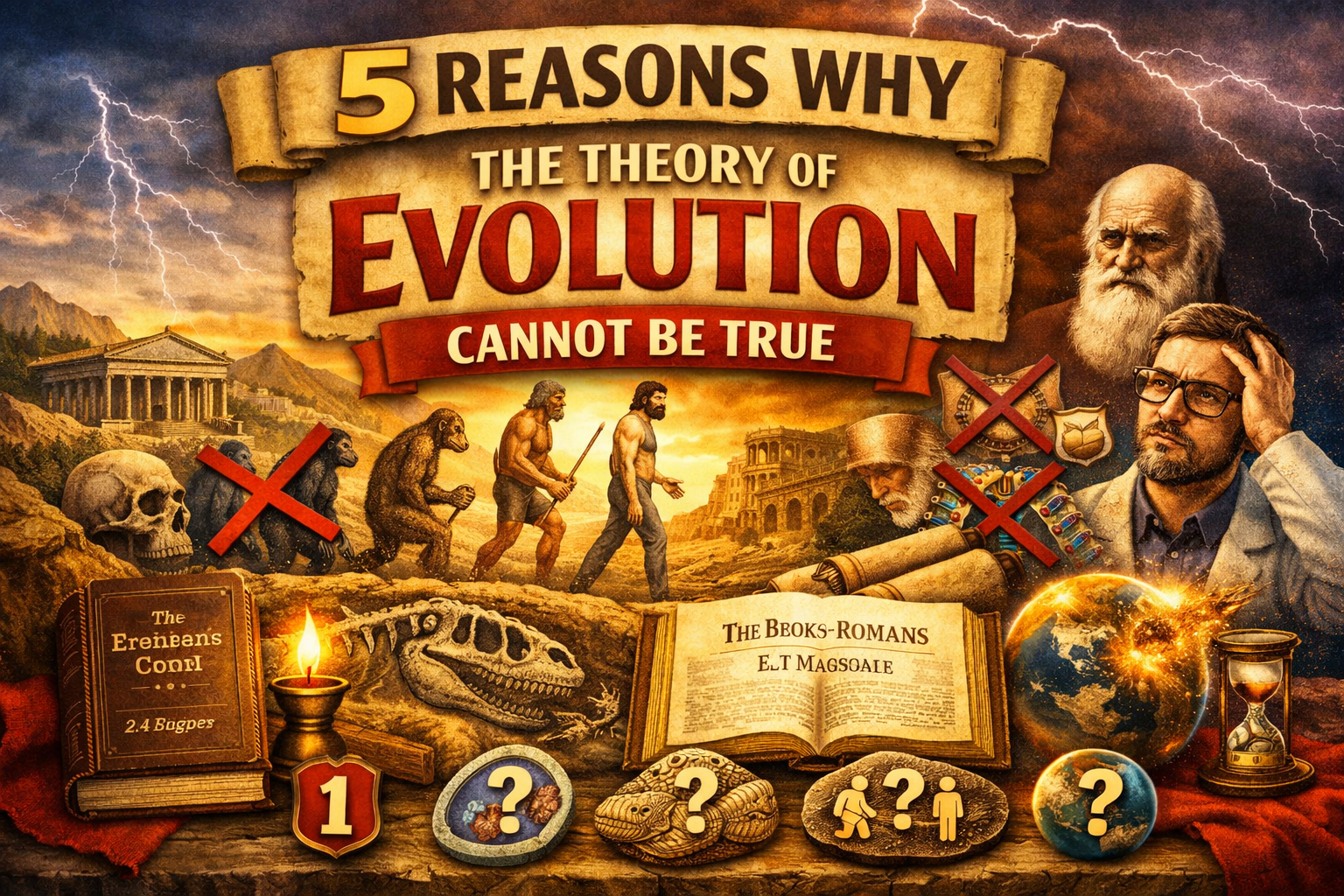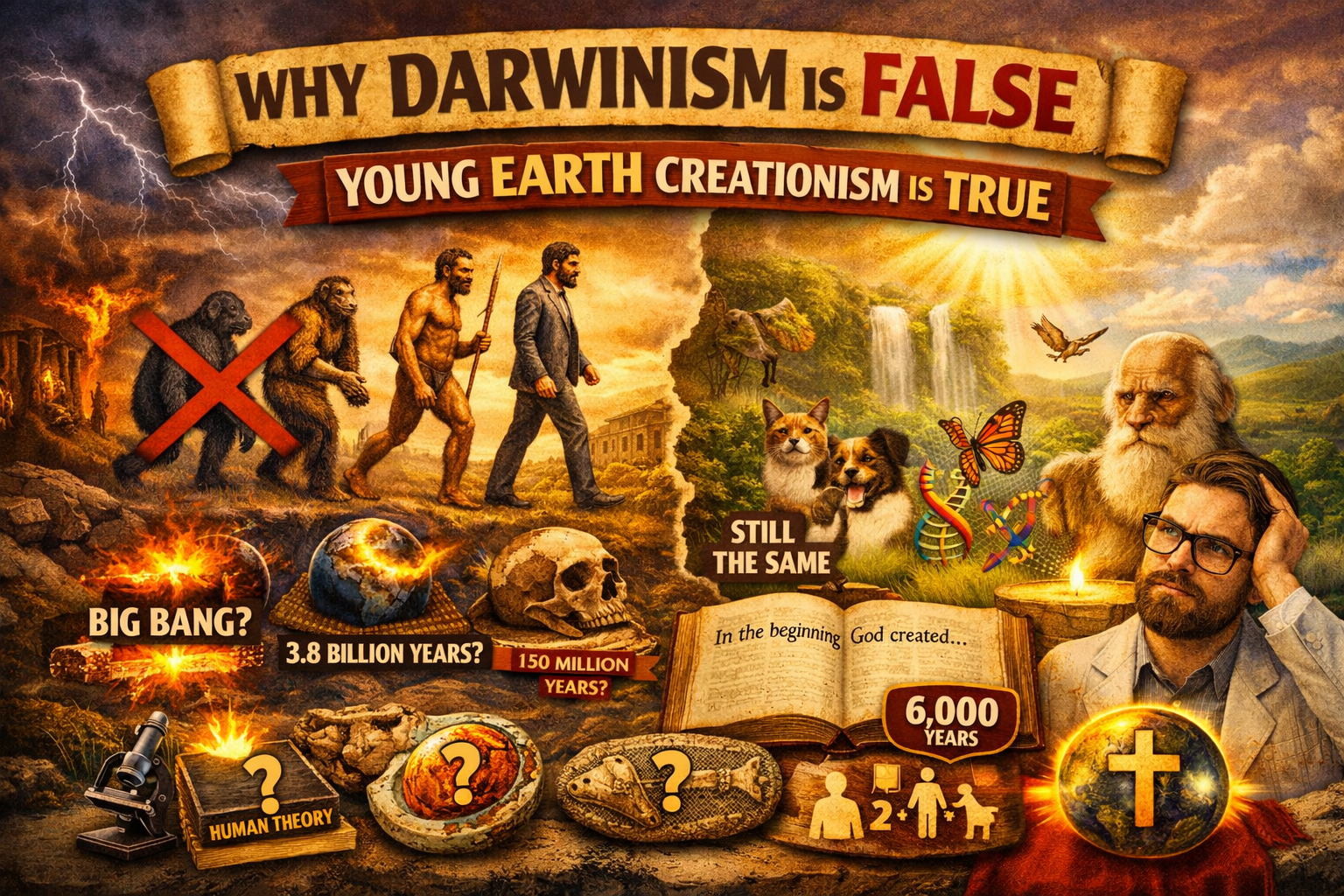
1. The Age of the Earth
Creationism teaches that the earth was created around 6000 years ago, based on the Bible.
Some claim that humans appeared on earth millions of years ago. However, if humanity had existed for 150 million years, and assuming generations of about 40 years, the population would be astronomically large—far beyond what we see today.
In such a case, we should expect:
- countless billions upon billions of humans
- massive civilizations throughout history
- vast numbers of graves and archaeological remains everywhere
Yet we do not find evidence of such an overwhelming human history. Instead, the biblical timeline from Adam and Eve aligns with the population we see today.
This raises serious questions about long-age evolutionary assumptions.
2. Big Bang and Scientific Claims
Science is what can be tested, proven, and demonstrated:
- the distance from Earth to the Sun can be measured
- Earth’s rotation can be tested and verified
However, some ideas such as the Big Bang cannot be directly observed or repeated.
Critics argue:
- No one has witnessed an explosion of a universe
- There is no video or direct observation of it
- If all stars came from one explosion, distribution should be uniform
Yet we observe uneven star distributions across the universe.
Additionally, if all matter came from one explosion, angular momentum suggests consistent direction of rotation. However, some moons and planets rotate differently, which raises questions for some about this model.
3. Species Transformation and Evolution
Darwinism teaches that species transform into other species over time.
However:
- we do not observe one species turning into a completely different species in real time
- we see variation within species, not transformation into entirely new kinds
For example:
- an orange does not become an apple
- a cat remains a cat, whether large or small
From this perspective, evolution is viewed by critics as belief in transformation without clear observable evidence.
4. Creation and Complexity
Creationism teaches that God spoke and creation came into existence. The Bible also supports prophecy as evidence of divine authority.
God declares in Isaiah 42:9 that He reveals the future before it happens, which is seen as evidence of divine knowledge.
Critics of evolution argue:
Complex systems cannot function without all parts working together:
- the human heart requires blood flow
- lungs require full function
- digestion requires multiple integrated systems
They argue that partial development could not sustain life.
Similarly, a car cannot function without essential parts like:
- engine
- fuel system
- transmission
Therefore, complexity is presented as evidence of intelligent design rather than gradual random development.
5. Limits of Human Knowledge
Humans only know a small portion of total knowledge.
Therefore:
- human conclusions may be incomplete
- human reasoning can be mistaken
- truth cannot depend solely on human understanding
Like a pilot relying on instruments rather than feelings, believers argue that the Bible provides a reliable guide over human opinions.
Critics of evolution argue that many people accept it without deep study of Scripture or prophecy.
6. Human Authority and Belief Systems
Many people trust diplomas, institutions, and scientific authority. However, creationists argue that human authority is not equal to divine truth.
The Bible warns against trusting human wisdom above God’s Word.
Some also point to historical events such as the flood in Noah’s time, where people ignored divine warning because they trusted human reasoning.
7. Natural Selection and Adaptation
Natural selection is described as a mechanism that helps species adapt.
However, creationist interpretation argues:
- natural selection does not create new life forms
- it only helps existing species survive environmental changes
Examples:
- skin color adaptation in different climates
- survival traits within the same species
Thus, adaptation is not considered evidence of transformation into entirely new kinds.
8. The Complexity Argument
Life is highly complex.
Critics of evolution argue:
- random processes cannot produce organized systems
- intelligence is required for planning and design
They compare this to:
- a house requiring a builder
- a car requiring a designer
Therefore, complexity is used as an argument for intelligent design rather than random evolution.
9. Conclusion — Choosing Truth
This perspective concludes that:
- evolution is based on assumptions about deep time and transformation
- creationism is based on biblical teaching and prophecy
- truth should be sought through Scripture and careful study
Readers are encouraged to study the Bible and consider prophecy seriously, including:
- Daniel and Revelation
- the Great Controversy theme
- end-time prophecies
A final appeal is made to seek God sincerely, asking for faith, understanding, and spiritual truth.