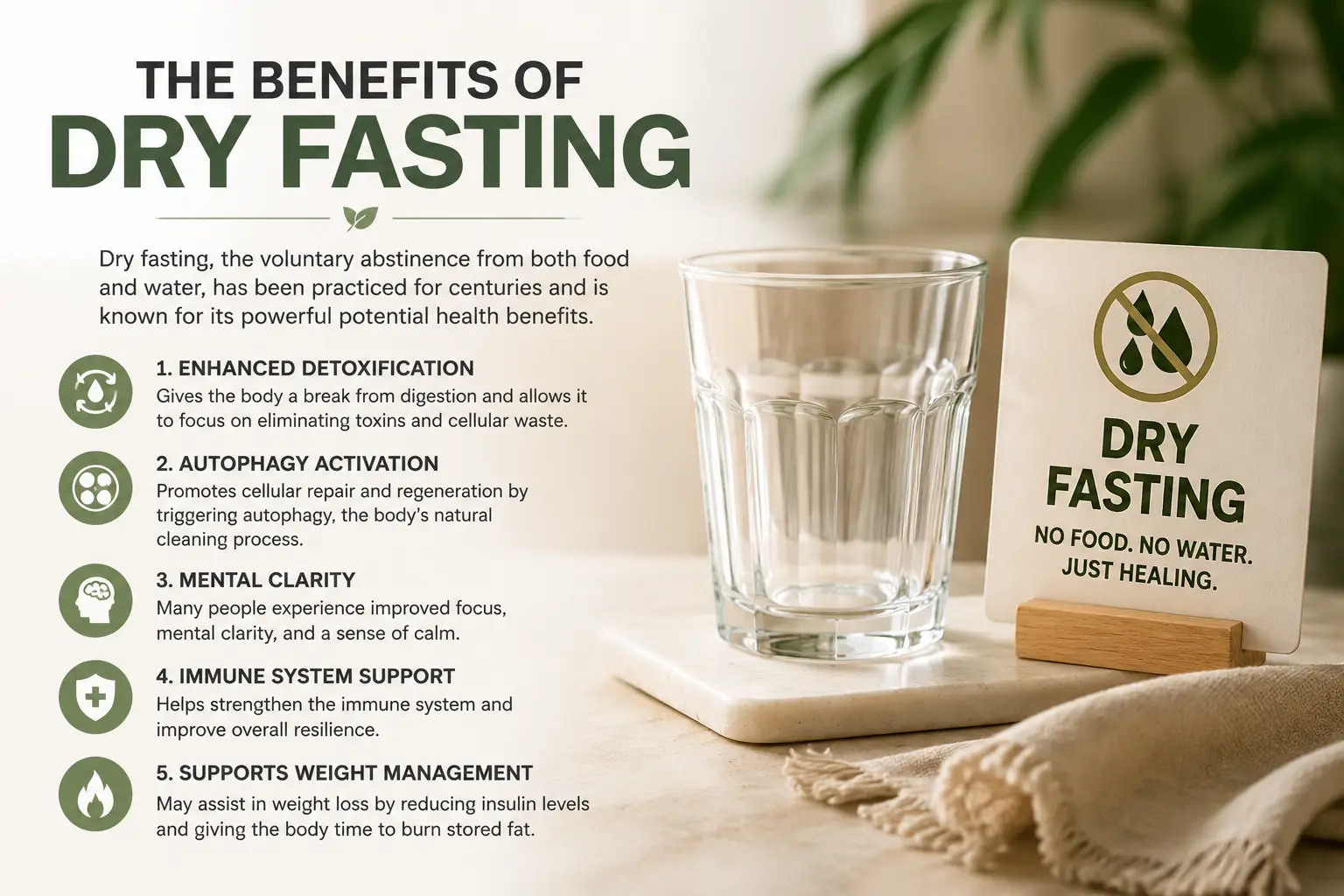
We are not doctors — this is simply insight gathered from online health practitioners and others who write about wellness. Dry fasting is not for everyone, so please consult your physician before attempting it. We’ve gathered some helpful tips from Dr. Fung, who has seen remarkable results using fasting to help with diabetes and obesity. When we fast, our cells undergo cleansing, and autophagy clears out damaged cells from the body. Let’s explore the benefits of dry fasting for health. Be sure to learn about fasting in general before attempting dry fasting, since it’s a much more intense practice.
Dry Fasting for Health: Avoid Exercise
While fasting in general, light exercise can be fine, especially for those experienced with fasting. Fasting is like training for a sport — you don’t run a marathon on your first attempt; you build up gradually. Many people assume exercise and fasting don’t mix well, but fasting can actually be excellent for athletes — some even report improved performance while fasting, since they feel lighter, with an empty stomach that allows their muscles to focus fully on the task at hand.
However, if you’re dry fasting for health, it’s much better to avoid exercise altogether, since your body has no water reserves, and sweating during a dry fast could be dangerous. A note of caution: dry fasting can be excellent for your health, but avoid exercising during it, especially in hot or humid conditions where you’re likely to sweat — in that case, you would need to drink water, which would break the dry fast. For regular fasting (with water), exercise can be wonderful. Interestingly, many athletes maintain a poor diet filled with processed food and excess meat — they may appear fit and muscular, yet their cells remain undernourished, and their bodies are often exhausted from eating too frequently throughout the day.
Dry Fasting for Health: Fewer Meals
One of the great benefits of fasting is that it allows the body to truly rest. When we eat multiple times a day, our bodies never get a real break — they’re constantly digesting food, and we often don’t realize how much this tires the stomach and the entire body, which must continuously process everything we consume. In fact, digestion can use up to 80 percent of the body’s available energy. Imagine what your body could do if it weren’t spending that energy on digestion — it could redirect that power toward healing.
That’s exactly what happens when you fast. Your body begins searching for things to repair internally, and it has a remarkable intelligence for identifying what’s wrong and addressing it. This isn’t a quick process — it can take weeks or even months for your body to fully repair itself. Sometimes people fast and conclude, “This fast didn’t heal anything for me.” But when we fast, the body prioritizes the most urgent repairs first — you might have a concern with your wrist, but your body may determine that cleansing your liver is the more pressing priority.
Also, when you dry fast for health, many of the benefits continue even after the fast ends — similar to how, after running a marathon, your heart rate stays elevated and your body continues burning calories and benefiting from improved circulation for a while afterward. When you dry fast for health, the rest you give your body is an enormous benefit. Let your body rest for a while, and notice how much it appreciates the break. Don’t you enjoy a day off from work? Imagine how grateful your body will feel when you let it rest completely — your stomach isn’t digesting, your kidneys aren’t constantly filtering, and your whole body settles into a state of peace. This is an incredible health benefit in itself.
Dry Fasting for Health: Autophagy
This process really begins around the second or third day of fasting, kicking in shortly after you stop eating. This is one of the most significant benefits of fasting. When you stop eating, people often worry you’ll starve — and if you fast for too long without proper guidance, that’s a real risk. But for a few weeks, your body will stop relying on outside food and instead begin consuming its own internal material — clearing out damaged cells, cleansing the liver of excess buildup, and helping the kidneys cleanse as well.
Your body essentially begins consuming itself selectively, targeting only damaged cells, toxins, and harmful material. Is there any other way to cleanse your body this deeply, aside from fasting? Studies suggest that fasting and autophagy may help protect the body against chronic and degenerative diseases, and may also offer some protection against neurodegenerative conditions like dementia and Alzheimer’s.
As with all natural approaches, results aren’t guaranteed for everyone — every person and situation is different, much like saying buying a larger truck guarantees you’ll survive a car accident; outcomes still depend heavily on individual circumstances. Generally speaking, though, fasting tends to strengthen the body and support a healthier immune system.
Dry Fasting for Health
What’s the difference between regular fasting and dry fasting?
In dry fasting, a person abstains from drinking any water at all. Some people even avoid showering or any contact with water during this time. It’s generally said that without water, the human body can survive around three days, though some individuals report having dry fasted for as long as 12 days without complications — an area that would benefit from further study. Personally, I’ve dry fasted for 5 days and felt amazing.
Why do people choose to dry fast? Because the benefits are said to occur roughly three times faster. When you fast while still drinking water, your body has to process and eliminate that water, which can slow down the autophagy process. When you abstain from water entirely, your body has full, undistracted capacity to clean out damaged cells and toxins. Interestingly, even during a dry fast lasting several days, you’ll still need to use the bathroom occasionally, since your body draws water from stored fat — a process known as metabolic water.
Some people find dry fasting easier overall, since they report feeling less hungry compared to regular fasting. That said, many experience intense hunger during the first three days, which tends to fade afterward for most people. While the hunger doesn’t disappear entirely, many describe a noticeable sense of ease and freedom after a few days of fasting. Endorphins are released, leading some to feel genuinely uplifted after fasting for several days — a phenomenon connected to something called BDNF.
Dry Fasting for Health: BDNF
What is BDNF? It refers to a similar process to autophagy, but this time occurring in the brain — your body works to repair brain cells. There’s an account of a psychiatrist in Russia who observed a patient who stopped eating for several days. Initially, the psychiatrist urged him to eat, but as the patient continued fasting for 20 days, he was eventually discharged, having been deemed completely recovered.
Following this, a larger study reportedly involved around 20,000 individuals dealing with mental health conditions, with roughly 90 percent showing significant improvement after 20 days of continuous fasting. Dry fasting for health may also help decrease inflammation, and some research suggests fasting can support the growth of new brain cells. Fasting in general appears to help build resilience to stress, sometimes described as a “miracle grow” effect for the brain.
Dry Fasting for Health: Weight Loss
Fasting can support lasting weight loss — in fact, many believe this is the real secret to losing weight effectively. Many traditional diets fail to produce lasting results. Why is that? Because with most diets, weight loss is temporary — the body eventually adapts, and the weight returns. It’s often far more effective to eat one to three substantial meals within a short window of time, then avoid eating for the rest of the day. This approach is known as intermittent fasting — eating your meals within a 2-to-3-hour window, then fasting until the next day.
Fasting supports weight loss because the body genuinely burns through fat stores, converting fat into usable energy and water as part of its self-cleansing process. Fasting is also great for athletes, as it may help boost natural growth hormone production — many people turn to supplements for this effect, but fasting offers a way to support it naturally.
When you dry fast for health, you may notice a surprising boost in energy, since the 80 percent of energy normally spent on digestion becomes available instead to support brain function and muscle repair. Dry fasting for health can be an incredible way to help restore your overall well-being.