Category: Uncategorized

  • What Is a Lesson We Can Learn About Who God Is From the Bible?

    What Is a Lesson We Can Learn About Who God Is From the Bible?

    What Is a Lesson We Can Learn About Who God Is From the Bible?

    We can learn many lessons from God and the Bible. God is very different from human beings. The only way we can know how God works is by reading the Bible, looking at nature, and seeing how God transforms lives. The Bible says that the things that were written before are for our learning. We can learn from the lessons of the Bible and the events of the Old and New Testaments. These are loving warnings and encouragements for us today.

    1 CO 10:11 Now all these things happened unto them for examples: and they are written for our admonition, upon whom the ends of the world are come.

    God Is Slow to Anger

    God is slow to anger. This is something most people do not understand. God does not punish right away when someone is evil, selfish, proud, or unloving. God is merciful, and the reason why God does not judge right away is because the person can repent and turn around. Yet people do not know that each individual and country has a limit. There is a limit to God’s forbearance. When that limit is passed, then God’s judgments fall.

    EC 8:11 Because sentence against an evil work is not executed speedily, therefore the heart of the sons of men is fully set in them to do evil.

    This is a warning we need to give to all. God is very kind, full of love and tenderness. Yet when we pass a limit, judgments fall. The thing is, nobody knows what that limit is. In the time of Noah, God waited 120 years for the people to repent, to believe the truth, and to escape the judgment that was to fall on selfish, unloving, and proud people. Most people refused those warnings. God’s forbearance was treated with contempt.

    Soon the same thing will happen. The world will use human devisings, rejecting the Bible. Truth is one, and God is truth. If we do not follow truth, then we follow deception. Most people will soon reject the 3 angels’ message, which is the last message for planet Earth. Many, even among the Christians, will receive the mark of the beast. Can someone who receives the mark of the beast be saved? No. God is merciful and kind.

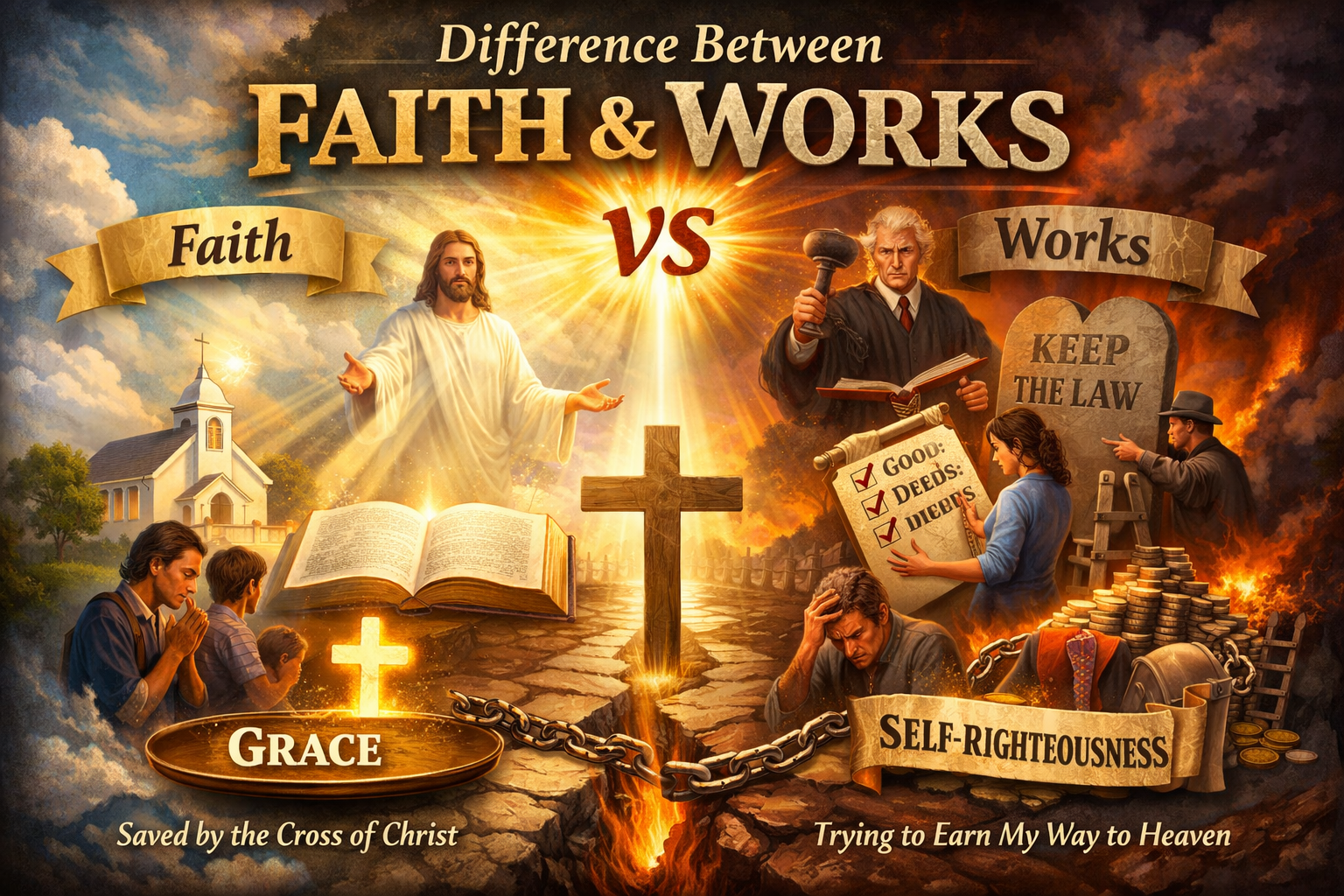
    God gives us the power to follow His will; this is called righteousness by faith. Legalism will be one great reason why people will be lost. Worshipping men and our own works, thinking that we are good when the Bible says there is nothing good in us, is a serious danger. Here we are laying the groundwork for this article. We need to know what pleases God in order to know how we can learn something from God.

    God Hates Legalism

    Work done to please oneself without true love is not from God. Nobody can do anything good; it all comes from God. The last message to be given to the world after the 3 angels’ message is the loud cry. This is found in Revelation 18. It is also called the 3rd angel in verity. It is also called righteousness by faith. All glory is given to God, as Jesus says, “without Me ye can do nothing.”

    God is slow to anger. The Holy Spirit speaks to our hearts to let us know which path to take. What is truth? If we refuse truth, we shall be called by God many times. God was very slow to anger with Israel. The country was filled with idols and pagan worship, yet God still loved Israel and cared for them.

    But continual refusal of the truth led to the end of patience and forbearance. God’s judgments at last fell, and Assyria came and deported Samaria first, then Judah. This is the 7 times more chapter in Leviticus, the 2520 time frame. Some people say it is a prophecy. The chapter is Leviticus 26.

    God Does Not Judge by Appearance

    We can learn that God does not judge by appearance. On earth, people think that because someone wears a doctor’s suit or looks like a preacher, he is so. But God tells us that we need wisdom, which only comes from God. We need to be slow to come to conclusions. God looks at the heart. The Pharisees looked at Jesus’ appearance. They did not look further and fell into darkness.

    Jesus accepted the lowly, the rejected, those society did not like. It shows that God’s kingdom is not of this world. If we judge others according to this society, we will come to wrong conclusions, because the way of judging things in this society is contrary to God’s will. If we judge according to what is accepted in this society, we will follow the world and its precepts.

    JN 18:35 Jesus answered, My kingdom is not of this world: if my kingdom were of this world, then would my servants fight, that I should not be delivered to the Jews: but now is my kingdom not from hence.

    Society does not like the sincere, the humble, the loving. They love the proud, the selfish. We need to choose on which side we are. All who want to be friends of the world become enemies of God. We cannot be on both sides at the same time.

    LK 16:15 And he said unto them, Ye are they which justify yourselves before men; but God knoweth your hearts: for that which is highly esteemed among men is abomination in the sight of God.

    Many things are highly esteemed in this world. Being rude and aggressive is highly esteemed. Someone who is unloving will be accepted. Someone who lies sometimes will be accepted by society. Someone who thinks their own opinions is truth is accepted by society. These things are an abomination to God. Jesus said He is humble, and if you want to enter heaven, then you will need to be like Jesus.

    MT 11:29 Take my yoke upon you, and learn of me; for I am meek and lowly in heart: and ye shall find rest unto your souls.

    There is rest when we do not seek the first place. There is rest when we give glory to God and we do not seek to be applauded all the time. It is a great rest to understand that all things come from God. Then taking credit for what God has done is a lie and robbing what belongs to God. It is rest to know that the blessings and successes we receive all come from God.

    The First Place

    All these lessons from the gospel of Jesus seem to be basic. But we can see many are not doing these examples of who God is. People in the church love to get to advanced Bible prophecy when the basics are not understood. Not seeking the first place—why do people want to seek the first place? It comes from a sense of lack. What is a lesson from God?

    When we know that God will lift us up at the right time, then there is no need to seek by our own strength to be exalted before men. The Bible says that those who seek to exalt themselves are not approved by God.

    2 CO 10:17 But he that glorieth, let him glory in the Lord.

    18 For not he that commendeth himself is approved, but whom the Lord commendeth.

    When we commend ourselves, or when we seek to be glorified before men, or when we seek people’s approval for ourselves, we still have not understood that all things come from God. This is like the righteousness by faith belief. Many say we are saved by grace, but they are confused and deep down still believe they are saved by doing things.

    Many know the verse that says all things come from God. Yet deep down they believe that they can do things without God. They believe that they are righteous without God.

    JN 15:5 I am the vine, ye are the branches: He that abideth in me, and I in him, the same bringeth forth much fruit: for without me ye can do nothing.

    But because society does not believe that, the nominal Christian reads the Bible but follows the world.

    EX 23:2 Thou shalt not follow a multitude to do evil; neither shalt thou speak in a cause to decline after many to wrest judgment:

    There is nothing such as the first place. We were all created by God. God gave different gifts to people. All gifts come from God, and to Him goes the glory. We do not know someone. Maybe they have dormant gifts. We cannot judge where they are in life. Someone who is socially strong should not judge one who is more secluded. In fact, Jesus’ favorite apostle was John, who was more quiet and humble.

    We need to see others as better than ourselves. Jesus said it is better to give than receive. It is a blessing to listen more than talking. It is better to give than receive. People need love; people need to be heard. These principles we have set here are the lessons of Jesus we learn from the Gospels. This is how we know what God loves and who God is. God’s kingdom is so different from these earthly kingdoms.

    AC 20:35 I have shewed you all things, how that so labouring ye ought to support the weak, and to remember the words of the Lord Jesus, how he said, It is more blessed to give than to receive.

    God Loves You

    God loves you more than His own life. But God will not let someone who is not like Jesus be in heaven. The imprint of Satan is upon human beings. The waiting time until Jesus comes is for us to remove those wicked traits of character and become more like Jesus: pride, selfishness, dishonesty, unloving, unkind spirit, judging, and condemning others. All these things need to be removed, as Jesus said we need to have victory over sins.

    HE 12:14 Follow peace with all men, and holiness, without which no man shall see the Lord:

    God loves you. In fact, Jesus preferred to die rather than be separated from you forever. This is what would have happened. Unless Jesus had died on the cross, God would have had to be separated from you forever. For one sin, we deserve to die.

    RO 6:23 For the wages of sin is death; but the gift of God is eternal life through Jesus Christ our Lord.

    Unless Jesus had taken the punishment that you deserve, then you would have had to be destroyed forever. Jesus would have been separated from you forever. God created you to spend time with Him. In fact, the only reason why God created you is to love Him and to be loved by Him.

    What is a lesson from God? God will restore this loving relationship soon. Jesus thinks about you all the time. Jesus knows the details of your life. Jesus can be called upon when you need Him. Jesus will always listen to your needs.

    1 PE 5:7 Casting all your care upon him; for he careth for you.

    Jesus will deliver you from your troubles.

    PS 50:15 And call upon me in the day of trouble: I will deliver thee, and thou shalt glorify me.

    You need to persevere in prayer. God can test our faith.

    LK 18:1 And he spake a parable unto them to this end, that men ought always to pray, and not to faint;

    2 Saying, There was in a city a judge, which feared not God, neither regarded man:

    3 And there was a widow in that city; and she came unto him, saying, Avenge me of mine adversary.

    4 And he would not for a while: but afterward he said within himself, Though I fear not God, nor regard man;

    5 Yet because this widow troubleth me, I will avenge her, lest by her continual coming she weary me.

    6 And the Lord said, Hear what the unjust judge saith.

    7 And shall not God avenge his own elect, which cry day and night unto him, though he bear long with them?

    8 I tell you that he will avenge them speedily. Nevertheless when the Son of man cometh, shall he find faith on the earth?

    Believe that when you pray, Jesus hears you. Your prayers can be answered if you believe that you have received it. What do you want from God? Do you believe that you already have those things in your life? Imagine yourself with the things you are praying for, and they will become true.

    MK 11:24 Therefore I say unto you, What things soever ye desire, when ye pray, believe that ye receive them, and ye shall have them.

    Spend time with Jesus, my friend. He loves to spend time with you. This is the reason why God created you. Tell God all your needs and wants. Jesus is your best friend. Jesus can bless you beyond all you can ask or think. Have you accepted Jesus in your heart before? Repeat after me: Father God, forgive my sins, come into my heart. Give me Your righteousness. Heal and bless me, please, in the name of Jesus, amen.

  • 1 Timothy Question and Answers — King James Version

    1 Timothy Question and Answers — King James Version

    1 and 2 Timothy, Titus

    The book of Timothy is a New Testament book and letter of Paul to Timothy. We put questions and answers on each chapter. This is an amazing way to learn the book of Timothy Bible. You can quiz yourself by reading the questions of Timothy Bible verses and seeing if you know the answers to the questions. Thus you can see if you really know the Bible and the book of Timothy Bible verses or not.


    1 Ti Ch 1

    The end of the commandment? Is love out of a pure heart.
    And? Of a good conscience and of faith unfeigned.
    Some having swerved? Have turned aside unto vain jangling.
    Jangling? A clattering sound.
    Desiring to be? Teachers of the law.
    Understanding? Neither what they say nor whereof they affirm.

    Who was before? A blasphemer, a persecutor, and injurious.
    But I obtained? Mercy because I did it ignorantly in unbelief.
    Unto the King eternal? Immortal, invisible, the only wise God, be honour and glory.
    Holding faith? And a good conscience.
    Which some having? Put away concerning faith, made shipwreck.
    Of whom is? Hymenaeus and Alexander.
    Whom? I have delivered unto Satan that they may learn not to blaspheme.


    1 Ti Ch 2 — 1 Timothy Question and Answers King James Version

    I exhort? That supplications, prayers, intercessions, and giving of thanks be made for all men.
    For kings and all in authority? That we may lead a quiet and peaceable life.
    This is good in the sight of God? Who will have all men to be saved and come to the knowledge of the truth.
    Who gave Himself? A ransom to be testified in due time.
    Let the women learn? In silence with all subjection.
    But I suffer not a woman? To usurp authority over the men but to be in silence.
    For? Adam was first formed.
    Adam was not? Deceived, but the woman being deceived was in the transgression.


    1 Ti Ch 3

    A bishop must be? Blameless, husband of one wife, vigilant, sober, of good behaviour, given to hospitality, apt to teach.
    Not given? To wine, no striker, not greedy of filthy lucre, patient, no brawler, not covetous.
    One that? Rules well his own house.
    For if a man know not how to rule his house? How can he take care of the church of God?

    Not a novice? Lest being lifted up with pride.
    Holding? The mystery of the faith in a pure conscience.
    The church of the living God? Which is the pillar and ground of the truth.
    Great is the? Mystery of godliness.
    God was? Manifest in the flesh, justified in the Spirit, seen of angels, preached unto the Gentiles, believed on in the world, received up into glory.


    1 Ti Ch 4 — 1 Timothy Question and Answers King James Version

    In latter times? Some shall depart from the faith.
    Giving heed? To seducing spirits and doctrines of devils.
    Speaking? Lies in hypocrisy, having their conscience seared with a hot iron.
    Refuse? Profane and old wives’ fables.
    Godliness is? Profitable unto all things.
    Having promise? Of the life that now is and of that which is to come.
    We labour and? Suffer reproach because we trust in the living God.


    1 Ti Ch 5

    Rebuke not? An elder but entreat him as a father.
    He that provides not for his house? Has denied the faith and is worse than an infidel.
    Let the elders that rule well? Be counted worthy of double honour.
    Especially? Those that labour in the Word and doctrine.
    Thou shalt not muzzle? The ox that treads out the corn.
    Against an elder? Receive not an accusation.
    But before? Two or three witnesses.
    Them that sin? Rebuke before all that others may fear.

    Doing nothing? In partiality.
    Lay hands? Suddenly on no man.
    Neither be? Partaker of other men’s sins.
    Some men’s sins? Are open beforehand.
    Going? Before to judgment.
    The good works of some? Are manifest beforehand.


    1 Ti Ch 6 — 1 Timothy Question and Answers King James Version

    Let servants count? Their masters worthy of all honour.
    He is proud? Knowing nothing.
    Supposing that gain? Is godliness.
    But godliness with? Contentment is great gain.
    We brought? Nothing into this world.
    We can carry? Nothing out.
    Having food and raiment? Let us be content.
    Follow after? Righteousness, godliness, faith, love, patience, meekness.

    Fight the? Good fight of faith.
    Lay hold? On eternal life.
    Whereunto? Thou art also called.
    Which in his time? He shall show, who is the Blessed and only Potentate, the King of kings and the Lord of lords.
    Who only? Has immortality.
    Who dwells? In the light which no man can approach unto.
    Unto whom? No man has seen nor can see.
    To whom be? Honour and power everlasting.
    Charge them that are rich? To not be highminded.
    Not to trust in? Uncertain riches.

    But in the living God? Who gives us richly all things to enjoy.
    That they be rich? In good works.
    Ready to? Distribute.
    Willing to? Communicate.
    Avoiding oppositions of? Science falsely so called.


    2 Ti Ch 1 — 1 Timothy Question and Answers King James Version

    When I call to remembrance? The unfeigned faith.
    Of your grandmother? Lois and mother Eunice.
    Be not ashamed? Of the testimony of our Lord.
    Who has called us? Not according to our works.
    By the appearing of our Lord? Who has abolished death and has brought life and immortality to light.

    Has appointed a? Preacher and an apostle and a teacher.
    I know in whom I? Have believed and I am persuaded that He is able to keep that which I have committed unto Him against that day.


    2 Ti Ch 2

    No man that wars? Entangles himself in the affairs of this life.
    That? He may please Him who has chosen him to be a soldier.
    If we be dead with Him? We shall also live with Him.
    If we suffer? We also shall reign with Him.
    Their word doth eat like a canker? Such as Hymenaeus and Philetus.
    Who say? The resurrection is past.
    The servant of the Lord must not? Strive.
    But be? Gentle unto all men, apt to teach, patient.
    In meekness? Instructing those who oppose themselves.


    2 Ti Ch 3

    In the last days? Perilous times shall come.
    Men shall be? Lovers of their own selves, covetous, boasters, proud.
    Blasphemers? Disobedient, unthankful, unholy.
    Without natural affection? Trucebreakers, false accusers, incontinent, fierce.
    Despisers of? Those that are good, traitors, heady, highminded, lovers of pleasure more than lovers of God.

    Having a form? Of godliness but denying the power.
    From such? Turn away.
    Ever learning? And never coming to the knowledge of the truth.
    As? Jannes and Jambres withstood Moses.
    Also? Resist the truth — men of corrupt minds, reprobate concerning the faith.
    They shall proceed? No further; their folly shall be manifest to all.

    What persecutions? I endured.
    Out of them all? The Lord delivered me.
    But evil men? And seducers shall wax worse and worse.
    Deceiving? And being deceived.
    All Scripture? Is given by inspiration of God.
    Is profitable? For doctrine, reproof, correction, instruction.
    That the man of? God may be perfect, thoroughly furnished unto all good works.


    2 Ti Ch 4 — 1 Timothy Question and Answers King James Version

    Jesus who shall judge? The quick and the dead at His appearing.
    Preach the Word? Reprove, rebuke, exhort with all longsuffering and doctrine.
    For the time will come? When they shall not endure sound doctrine.
    They shall heap? To themselves teachers, having itching ears.
    They shall? Turn away their ears from the truth and shall be turned unto fables.

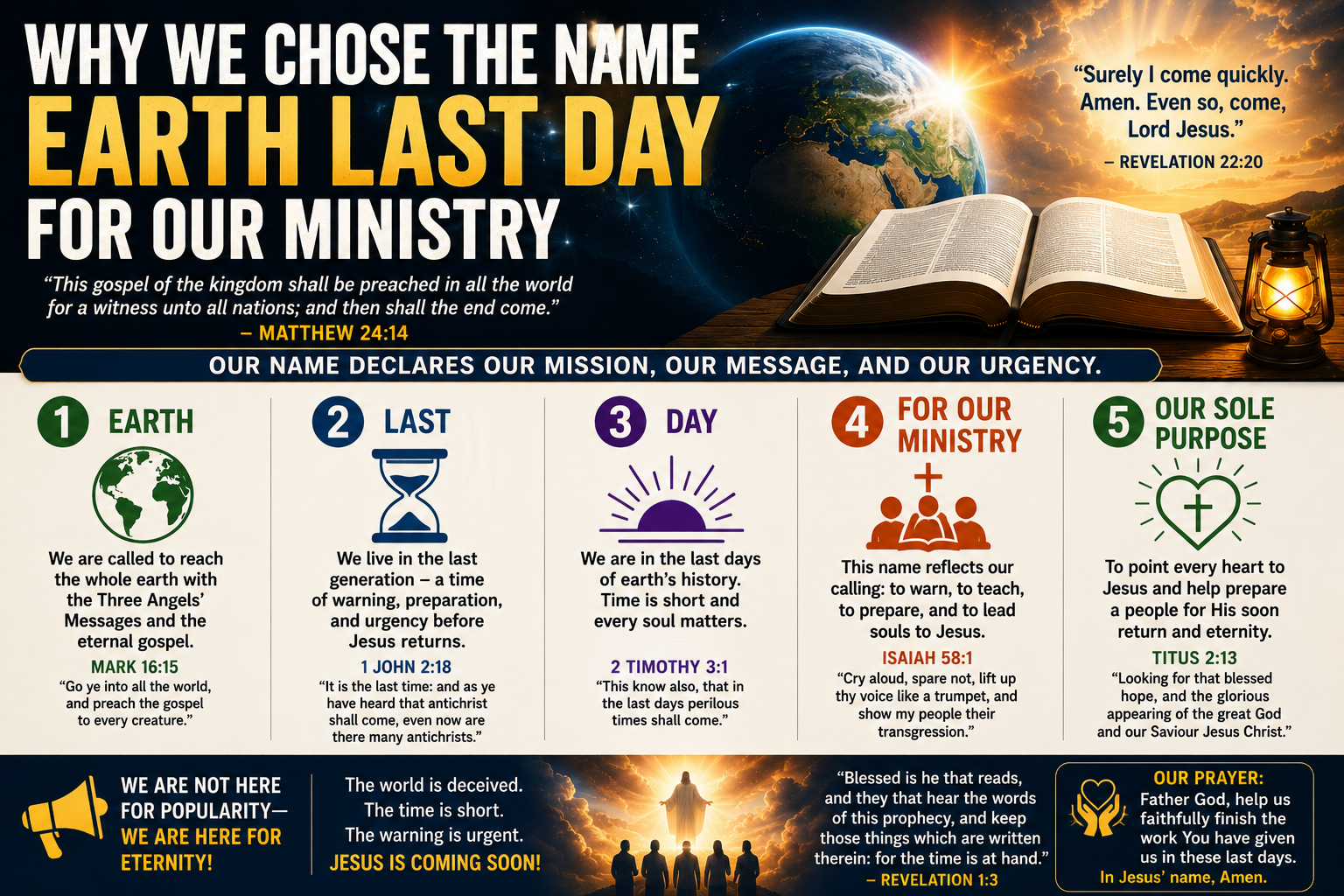
  • Why We Chose the Name “Earth’s Last Day” for Our Ministry

    Why We Chose the Name “Earth’s Last Day” for Our Ministry

    People will be greatly surprised to see all the terrible judgments of God that will soon fall upon the earth. The warnings God sends come through natural disasters and through Bible messengers. Those messengers are chosen by God. The thing is, those messengers do not carry a credential — they do not hold a paper saying “Sent by God.”

    Earth’s Last Day is a warning message showing that the love of Jesus is being rejected by many.
    The only way we can discern whether someone is a true messenger of God is through discernment, and through the Holy Spirit speaking to us. The kindness of God is being insulted, and the Holy Spirit is going unperceived by the masses of people on the earth. The only natural consequence is that disasters come to bring men and women to their senses, so they can see the danger they are in of losing eternal life. Let us find out the five reasons why we chose the name “Earth’s Last Day” for our ministry

    1. Earth’s Last Day — The Christian World Is Sleeping
      The state of the church is alarming. People in Christian churches are extremely wicked, selfish, proud, apathetic, and they do not realize how deeply their behavior offends God. They do not see how far their own lives are from Jesus. Earth’s Last Day exists to wake up the Christian world.

    2. I remember being in Eastern Europe, where I met someone from my own country. We talked for a few minutes, and he said, “We need to be like Jesus.” I was so taken aback that someone so extremely proud, selfish, apathetic, and unloving could say, “I am like Jesus,” that I could hardly believe he had said such a thing.

    3. Many times, people’s blindness to their own spiritual condition is so far removed from the truth that it resembles the Native Americans looking out at the Spanish ships arriving in America — the sight was so far outside their frame of reference that they did not even perceive the ships. We truly live in a lying generation, both inside and outside the church. Earth’s Last Day exists to wake us up.
    4. Earth’s Last Day — The World Is Deceived and Blind
      We live in a deceptive, lying, and dishonest generation. After speaking with thousands of people, I have come to realize that if I told most people the light was red, they would insist it was green. This is a lying generation that claims to be good and politically correct while being thoroughly corrupt — a generation that claims all is well when, in truth, all is wrong. Earth’s Last Day exists to help you see the truth and follow Jesus.
      Galatians 6:3 — For if a man thinks himself to be something when he is nothing, he deceives himself.

    5. People today believe they get to decide what truth is. We have arrived at a time when humans think they are gods, and there is nothing more offensive to God than humans believing they are gods who no longer need the real God. Earth’s Last Day exposes the lies and sins of our day, and points you to the solution: Jesus — because we are all sinners, and unless we recognize this, there is no solution.

    6. Unless we see our true condition, no help is possible. Unless a driver recognizes his car is on fire, he cannot fix it. Unless the sinner sees his utterly lost and undone condition, there is no help from God. Unless we recognize that the only remedy is the righteousness of Jesus, the sinner remains in his deplorable state. Earth’s Last Day points you to that solution.
      Humans are all corrupt and wicked. God’s only solution is righteousness by faith.
    7. Earth’s Last Day — The Voices for God Are Very Few
      Fewer and fewer people believe the Bible; instead, they trust in human power, human reasoning, human speeches, human inventions, and human deception. Can we believe truth and lies at the same time? No — we must all make a decision. At Earth’s Last Day, you will realize that most churches preach only part of the Bible, causing people to miss many incredible messages that few ever address.
      Follow the lies, or follow the truth.
      This, in fact, is the story of planet Earth. At Earth’s Last Day, we teach that humans have a fallen nature, and that through God, we can become like Jesus. These character traits are seen as weaknesses by the world, but they are in fact the power and character of God:
      Humility

    Honesty

    Sincerity

    Kindness

    Gentleness

    Mercy
    Every human being faces this choice. No one is immune to it. Every day, we make decisions — we choose right, or we choose wrong. We choose lies, or we choose truth. Our lives are made up of the sum of those daily choices, just as a bank account is made up of the sum of daily and monthly income. Are you choosing right or wrong? You stand on the side of God or Satan according to what you believe — or refuse to believe. Earth’s Last Day exposes truths that other churches rarely discuss.


    Hosea 9:9 — They have deeply corrupted themselves, as in the days of Gibeah: therefore He will remember their iniquity, He will visit their sins.
    Sadly, the voices speaking the truth are becoming fewer. Nevertheless, in the judgment, no one will have any excuse, for every day the Holy Spirit speaks to all humans, saying:
    Isaiah 30:21 — And your ears shall hear a word behind you, saying, This is the way, walk you in it, when you turn to the right hand, and when you turn to the left.
    Luke 18:8 — I tell you that He will avenge them speedily. Nevertheless, when the Son of man comes, shall He find faith on the earth?
    SODOM AND GOMORRAH

    1. Earth’s Last Day — The State of Society Is Becoming More Evil
      What is more alarming than society becoming very wicked is that most people on earth do not even realize it. They believe it is normal to be hateful, selfish, proud, and apathetic. What will bring God’s terrible judgments is not the large, obvious sins. Less than one percent of the population does something as extreme as killing someone or robbing a bank. Earth’s Last Day helps you find the truth and exposes things other preachers do not address.
      What was the sin that brought Sodom’s fall?
      Ezekiel 16:49 — Behold, this was the iniquity of your sister Sodom: pride, fullness of bread, and abundance of idleness was in her and in her daughters, neither did she strengthen the hand of the poor and needy.

    2. We see that the sins of Sodom are things almost never exposed in most churches. When was the last time you heard a sermon against pride or selfishness? The sin of Sodom was pride and selfishness — they thought only of themselves. They did not care about others. They did not love others. They were apathetic. They claimed they needed nothing. Today, people might say, “Well, this isn’t so bad.” It might not seem bad in the eyes of men. But this is among the most offensive things a person can do in the eyes of God — and what truly matters is what God considers right or wrong, not what men think.
      If the most important thing we can do is love, then what is the worst thing we can do? Not love.
      Pride is not loving others.

    Selfishness is not loving others.

    Apathy is not loving others.
    What was the sin of the days of Noah?
    Genesis 6:5–7 — And God saw that the wickedness of man was great in the earth, and that every imagination of the thoughts of his heart was only evil continually. And it repented the Lord that He had made man on the earth, and it grieved Him at His heart.


    The sin of the days of Noah was that men thought only evil — they had a heart of unbelief. And if we have unbelief, what do we have? A dishonest and lying spirit. We refuse the truth because we are liars. Like today, most people in Noah’s time believed they could decide what truth was for themselves. But humans are not God. Humans do not decide what truth is.


    We have come to a time like the days of Noah. At Earth’s Last Day, we expose, through the power of the Holy Spirit, the true sins of the last days. The true sins of the days of Noah were lying, deception, and dishonesty. When someone is dishonest, it is because they believe their own reasoning is above God’s — and they are also proud. Violence filled the earth, and violence comes from a failure to love others, which we can directly correlate with the sins of Sodom.
    What were the sins of the Pharisees?


    The Jewish nation was greatly favored by God. The sin of the Pharisees was also unbelief, pride, and the belief that outward forms and ceremonies were enough to change the heart.
    Matthew 23:27 — Woe unto you, scribes and Pharisees, hypocrites! For you are like unto whited sepulchres, which indeed appear beautiful outward, but are within full of dead men’s bones, and of all uncleanness.
    The sin of the Pharisees was hypocrisy — lying to themselves, believing they were good when they were entirely corrupt. They were deceived, and the same thing is happening today — not only in the religious world, but among atheists as well, who are likewise filled with self-deception. This is what Earth’s Last Day seeks to expose.

    1. Earth’s Last Day — The Warnings Must Be Given to Help Some
      Some will break away from the deception. The pride, selfishness, unloving spirit, and apathy filling the earth are the very things for which God destroyed entire nations in the past. As people fail to heed these messages, God’s judgments will become more pronounced, and some will escape the terrible chaos soon coming upon the earth. It is in mercy that God allows this, because every time a natural disaster occurs, some people come to their senses and say:

    2. “I have drifted far from the love of Jesus. I did not spend time with God in prayer and Bible reading. Now is the time to come back to God.”
      At Earth’s Last Day, we urge you to come back to God, as time is very short. What if you were to die tonight — would you be lost? Losing heaven means losing everything; gaining heaven means gaining everything. Why not follow God now — read the Bible and pray every day, starting today?

    3. Repeat after me: Father God, forgive my sins. Give me Your robe of righteousness, and help me spend time with You every day. Provide for all my needs, give me the desires of my heart, prosper me, and may all my plans succeed according to Your will, in the name of Jesus, amen. BLOG HOME
  • 5 Reasons Why the Bible Rapture Doctrine Is False

    5 Reasons Why the Bible Rapture Doctrine Is False

    Did you ever wonder why Christians for two thousand years knew that the Second Coming would be visible, literal, and audible to all people? Why would the truth suddenly change? Would God have allowed millions of people to believe a lie — that Jesus would return visibly — when in fact, according to the secret rapture theory, Jesus would return invisibly and snatch away millions of people? And all of this after the judgment is finished, leaving people to live on earth for no reason without any further judgment? Find out the five reasons why the Bible rapture doctrine is false.


    1. Why the Bible Rapture Doctrine Is False — The Judgment Is Over When Jesus Returns.

    Did you know that when Jesus returns, the judgment will already be over? The Bible says that Jesus will close the books and then return to earth. The secret rapture theory cannot be true, because there would be no point in leaving people to live on earth for a few more years when all judgment has been closed and the destiny of every person has been decided.

    The Bible rapture doctrine is false because we know that Jesus will exchange His judge’s robes for the robe of King of Kings. Nowhere does the Bible say that life will continue on earth after Jesus returns. In fact, Revelation 20 tells us that when Jesus returns, Satan is bound because:

    • All the righteous are in heaven.
    • All the wicked have been slain by the brightness of Christ’s coming.
    • The wicked only resurrect after the end of the millennium — Revelation 20.

    After Jesus returns, the earth is empty. Satan remains here for one thousand years with no one to tempt. Life will not go on after Jesus returns. The return of Jesus means the judgment and eternal destiny of every soul will have already been decided. The Bible rapture doctrine is not biblical.


    2. Why the Bible Rapture Doctrine Is False — Every Eye and Every Ear Shall See and Hear Jesus.

    • Every eye shall see Him.
    • Jesus returns with the trumpet of God.
    • All people will see Jesus return.

    Every ear will hear the sound of the trumpet signaling the end of the world and the doom of all the wicked — the proud, the arrogant, the selfish, the self-righteous, the apathetic, the unloving, the unkind, and the rude. They will all know that their doom is sealed forever.

    Does any Bible verse say that Jesus will come invisibly? No. The phrase “as a thief in the night” does not mean Jesus will come invisibly. It means Jesus will come in the manner of a thief — a thief does not warn people; he simply enters and takes. Jesus will return suddenly and unexpectedly. Most human beings will be terribly shocked at how suddenly Jesus appears.

    Why the Bible rapture doctrine is false is clear: every eye shall see Jesus, and every ear shall hear Him. “When they say peace and safety, then sudden destruction comes upon them, and they shall not escape.”


    3. Why the Bible Rapture Doctrine Is False — The Seven Years of Daniel End at the Crucifixion.

    The seven years in Daniel 9 have nothing to do with the Second Coming. In Daniel 9, the angel Gabriel explains that this prophecy refers to Jerusalem being rebuilt, leading up to Jesus being baptized and the crucifixion of the Messiah. It then says that the 2,300 years end when the sanctuary shall be cleansed.

    This is speaking of Jesus entering the Most Holy Place and beginning to decide the eternal destiny of every person. Why the Bible rapture doctrine is false could not be clearer. Those seven years run from the Messiah being anointed — or baptized — in 27 AD, to the rejection of the Jewish nation in 34 AD. This is totally non-biblical when used to support a secret rapture.

    When Jesus was baptized, He said, “The time is fulfilled.” Which time? The 2,300 days of Daniel 8:14, which are explained in Daniel 9. The seven years begin with the Messiah being anointed in 27 AD. Adding seven years brings us to 34 AD. In the midst of those seven years, the Messiah would be cut off — crucified. Jesus was crucified in 31 AD. This proves that the Bible is incredible and accurate, and that the secret rapture theory is completely false.


    4. Why the Bible Rapture Doctrine Is False — Probation Ends Before Jesus Returns.

    The probation of all humanity ends before Jesus returns. After probation closes, there will be a period of days — and then Jesus will be seen in the sky. When probation ends, nobody will realize it.

    When probation ends, the churches will continue their round of false worship, filled with demonic influence. Governments will continue to enact laws, even as their doom is certain. The secret rapture is exposed as false. Jesus will come visibly. When Jesus returns, the judgment will already be finished. The seven years of Daniel 9 point to the baptism and crucifixion of Jesus — not to a future tribulation period.


    5. Why the Bible Rapture Doctrine Is False — One Taken, One Left.

    “One shall be taken, one shall be left.”

    Who is taken, and who is left?

    Jesus says, “Where you see the eagles, there shall the dead bodies be.” Revelation 20 says that when Jesus returns, the wicked are slain by the brightness of His coming. Then all the birds feed on the bodies of the wicked.

    This means that those who are taken are taken to be killed and consumed by the birds. Those who are left — those who remain — are caught up to meet the Lord in the air.

    1. Jesus returns and slays the wicked.
    2. Revelation 20 — birds feed on the bodies of the wicked.
    3. Those who are left behind — those who remain — are caught up in the air.

    The secret rapture is not in the Bible. It is a doctrine of devils. Would God have allowed millions of Christians to believe for two thousand years that Jesus would return visibly, only to now say it will be invisible? Is God a liar? No.

    Why the Bible rapture doctrine is false is clear — it is not in the Bible, and it is dangerous. Millions of Christians believe they will have a second chance, when in fact probation ends before Jesus returns. You need to have your life ready now, because Jesus could return at any moment.


    If you have not given your life to Jesus, know that Jesus loves you. Why not repeat after me:

    Father God, forgive my sins. Help me to live close to You, and take me to heaven at the right time, in the name of Jesus. Amen.


    EARTHLASTDAY.COM — Read amazing prophecy books.

  • 5 Ways to Win Debates Against Evolutionists

    5 Ways to Win Debates Against Evolutionists

    5 Ways to Win Debates Against Evolutionists

    I have done about one thousand debates with atheists from different countries, including famous research scientists in France and Aron Ra, who left the debate after three days — not being able to answer the questions. Here are the five main points you can use to let the truth triumph. Join our discussion forum.

    We do not win debates — our goal is to win a soul for Jesus. And the truth wins. Only if the person is honest will they accept it, for even an angel could talk to a dishonest person and they would still reject the truth. The reason for this post is that when we train the church, the truth advances.


    5 Ways to Win Debates Against Evolutionists

    1. Planning
    2. Opinions
    3. Honesty
    4. Transitions
    5. God Has No Proof

    1. Planning

    In debates, going into details is a waste of time. We have to go to the origin — the root of their belief.

    Do things appear for no reason? No.

    Do things appear from nothing? No.

    Do things appear out of nowhere? No.

    Evolution is the belief in magic. Things — plants, animals, humans — do not appear for no reason. All things need to be planned. This planning issue is the breaking point for evolution. All things need to be planned — a car, a shoe, a plane, a phone, a computer.

    A house has a shape and a color. Someone planned the size of the bedroom and the size of the kitchen. They planned their use and function. Then material was found and used to make the house.

    The house, unless it is planned in someone’s mind, will never exist. Nothing that exists can exist unless it is planned. After that, the more the atheist has been brainwashed by the random cult, the longer it will take for them to grasp this.

    I have had people who right away say, “Yes, I understand — evolution is foolish, and nothing can exist unless it is planned.” Some people will keep on giving examples, only to find out that they did believe in magic.

    Why is the earth blue and not red? Why is the earth round and not square? Why is the earth spinning? Why do humans have two eyes and not four? Can natural selection and mutation choose these things? No. Why?

    Natural selection has:

    • No brain
    • No thought
    • No intelligence
    • No planning

    But unless something is planned, it cannot exist — for to believe otherwise is to believe in magic. Believing otherwise is like saying a rock and a tree in the forest can become a castle — for no reason, out of nowhere, from nothing.

    Natural selection and mutation — the two gods that atheists worship — cannot make or create anything. They are only a program that God created to preserve species.

    Unless God had first created natural selection, cold weather or a change of food would kill us all. This God-given program preserves species, but it does not create anything. Why? Because it has no brain, no intelligence, and no planning.

    It is a blind mechanism that God designed to preserve animals and humans when cold comes after a long summer. As natural selection — the god of evolution — cannot plan, it cannot create anything. And when an evolutionist says, “I believe that it does,” then they truly believe in magic. What is more scientific — evolution theory or a magician’s trick? At least with a magician, we know the rabbit is real.


    2. Opinions

    One main reason why atheists are the way they are is because they think — “I believe something, therefore it is true.” Most people today think that because they believe something, it becomes true. It is like saying that a tribe in Africa believes they can eat your brain and receive power from it. Truth does not depend on our feelings.

    Did you create truth? No.

    Did truth exist before you were born? Yes.

    Will truth remain the same after you die? Yes.

    By your living, did you change truth? No.

    Who created truth? God.

    Who alone can decide what truth is? God.

    What is man’s job? To seek the truth.

    How will God judge humans? All honest people will accept the truth. All dishonest people will reject the truth.

    Evolutionists can be easily exposed by seeing that they believe in their own feelings and not in the truth. Most people’s minds are dishonest — thus their feelings are not the truth.

    But the word “science” was stolen by evolutionists 160 years ago. They mix scientific facts with a religion called evolution. And many people see some scientific facts and are deceived by the religion called evolution.


    3. Honesty

    It all comes down to honesty. So many atheists are trying to judge God — can you imagine such a thing? Humans judging God and God’s creation. God sends the truth to all people. The Holy Spirit speaks to hearts every day. God sends messengers to preach the truth. All who reject the truth are dishonest. All who accept the truth are honest.

    In the time of Noah, the only thing God did was send Noah to preach for one hundred and twenty years. All the honest in the crowd accepted the truth. The others — the majority — were either dishonest or blinded by the media, blinded by the crowds, or blinded by the scientists of their day.

    Evolution is destroyed easily — for nothing can appear for no reason, out of nothing, from nowhere. This is definitely the belief in magic, which they call science today.

    True science is what we can:

    • Test
    • Measure
    • Analyze

    Millions of years, transition from species to species, the geological column, the big bang — these are the doctrines and beliefs of a church called the random cult, which has a prophet called Darwin and two gods called natural selection and mutation. To these two gods, atheists give reasoning powers and divine attributes.


    4. Transitions

    Transitions are the only reason why atheists believe in the random religion called evolution. Why do atheists believe in evolution? Because they assume things.

    Never assume anything unless you know the facts — assuming can destroy your life. The Pharisees assumed Jesus was poor, with no house and no money. They assumed and concluded — “This man cannot be the Son of God.” They judged by appearance.

    Why do atheists believe in evolution? They see changes in the species and they assume — as we see changes, a small cat becomes a bigger cat — and they assume a cat becomes an elephant. This is where they have it wrong. They imagine things and assume things that are not real.

    Yes, there are changes within species. Humans change color and adapt to heat. Small cats become bigger cats. This is God’s given adaptation process to preserve us.

    Because we see transition within a species does not mean that the cat becomes a fish.

    Because we see a skateboard does not mean the skateboard becomes a motorcycle.

    Because we see a rock and a tree does not mean they become a house.

    Because we see a piece of metal does not mean it will become a car.

    Evolution is exposed as false — a religious cult that believes in magic. The Bible says it is a delusion of the mind. Evolution theory is taught as truth all over the world, but God calls it science falsely so called.


    5. God Has No Proof

    Many atheists say there is no proof for God.

    God says, “I tell you things before they come to pass, that you may know that I am God.”

    What is God’s proof for His existence and for the Bible being true? Bible prophecy and end-time events.

    Can a man say what will happen on June 10 in the year 3000? No.

    As God can — what does that mean? It means God lives in the future.

    If God lives in the future, what does that mean? It means God is divine.

    If God is divine and He lives in the future, what does that mean? It means the Bible is true, and God is the Lawgiver — and all humans must recognize Him who gives to all: food, air, water, money, jobs, friends, and talents.

    Evolution is the belief that things pop into existence from nowhere, out of nothing, for no reason. Evolution claims to be science — but evolution is a religion that was added to science when atheists took over the scientific world.

    Evolution is nonsense, as we know that the leaders of this world most of the time do not follow God — and we see that they teach contrary to what the Great Leader of the universe has been teaching.

    Have you seen how evolution is the belief in magic? Have you seen that there is no science in having things appear for no reason? Why not accept Jesus into your heart right now?

    Repeat after me — “Father God, forgive my sins, help me to walk with You until the end, and take me to heaven. In the name of Jesus, amen.”

  • Why the World Today Is as Wicked as in the Days of Noah

    Why the World Today Is as Wicked as in the Days of Noah

    Why the World Today Is as Wicked as in the Days of Noah — 5 Reasons and a Chronological Order of End-Time Events

    What is going on in our world? People are so rude, so selfish, so self-loving, so apathetic, so uncaring, so cold. Here are five reasons why the world is wicked, and a brief chronological order of end-time events. As we know, the final events will be rapid ones — for God will not allow this situation in the world much longer.

    5 Reasons Why the World Is Wicked — End-Time Events Timeline

    1. No love, no compassion
    2. Arrogance
    3. People think they are gods
    4. No honesty — most are liars
    5. Loving and respecting evil

    1. No Love, No Compassion

    Worst of all is that people do not seem to see anything bad in the world. They think it is normal for people to be so rude, so selfish, and so unbelieving. Chronological order of end-time events — the third woe is Islam, when it strikes again. Then Revelation says the nations grew angry. And the prophet Ellen G. White says there will be a great conflict — a third world war.

    End-time events timeline — we see that no love or compassion is greatly seen even inside the churches. Even most Christians are contaminated with this evil. But to go to heaven, one needs to be like Jesus. Why the world today is as wicked as in the days of Noah.

    This will never change — Jesus’ character will never change. Those who change with the world like a chameleon will perish with the world. Timeline of end-time events — the startling truth is that thousands of cities, now almost given over to idolatry, will be destroyed.


    2. Arrogance

    God is loving and kind — but when people or nations pass the limit, God’s love has to send plagues and punishments. Chronological order of end-time events — one more sign will be that the church will do as the world does. The church will talk, behave, and be like the wicked world that will perish. This is the end-time events timeline, and one more event to note.

    When was the last time you heard someone preach about pride and arrogance? Yet according to the Bible, this is the most evil sin one can commit. Because when someone does something really bad, they do it once. But when someone is proud, they are continually sinning. Why the world today is as wicked as in the days of Noah.

    They are continually offending God — continually saying, “I am god, and all I have is mine, and God did not give me anything.” The Bible asks this world two important questions:

    1. What do you have that was not given to you?
    2. And if it was given to you, why do you boast as if it was not given to you?

    All we have — the money, the work, the health, the friends, the social skills — were given by God as a gift. Have you heard of people who can play entire classical music pieces after hearing them only once? But this world says, “No — what I have and what I am came from me.” Jesus says, “Unless the branch is connected to the root, you have no life in you.”

    End-time events timeline — one more event is that the countries of the world will pass God’s boundary and will begin to receive God’s punishment. And I think we are already seeing this.

    Herod was killed instantly because he gave not God the praise. Nebuchadnezzar was made to eat grass like an animal for seven years — to teach him to give God the glory. Satan’s fall came because of pride. All sin is because of pride. Someone lies because they do not humble themselves enough to tell the truth. People steal because they love themselves above others.

    Timeline of end-time events — the rejection of God’s law that we see in the Christian world today will not end well at all. One thing to know: it is a fearful thing to fall into the hands of the living God. Why the world today is as wicked as in the days of Noah.


    3. People Think They Are Gods

    When humans start to think that they can decide what truth is, then we know we are very near the limit of God’s patience. I talk with thousands of people, and in almost every conversation the same thing is repeated.

    Most people think that there is no absolute truth — that everyone can choose their own truth. This could be the most offensive thing someone can do: to say to God, “You have no truth, because I — the human being — choose what truth is.” It is incredible that we would see such a time.

    Did you create truth? No.

    Did truth exist before you were born? Yes.

    Will truth remain the same after you die? Yes.

    By living your life, you did not change truth — for only the One who created truth can decide what truth is.

    Chronological order of end-time events — the shaking, the sealing, then the seven last plagues.


    4. No Honesty — Most Are Liars

    After talking to thousands of people, I have realized that we can tell about ninety-nine percent of people that two plus two is four — and they will reason it out and give their own explanation and arrive at a different answer. You can give truth to many people, and most will not accept it. Why the world today is as wicked as in the days of Noah.

    How will God judge the world?

    All people will listen to the truth. All dishonest people and liars will reject the truth. All honest people will accept the truth.

    Chronological order of end-time events — we need to study especially the book of Revelation and the book of Daniel. Christianity is separated into two parts: Babylon — the Revelation 18 church — and the bride — the Revelation 12 church. In which church are you? As the Babylon Christians will burn in hell — “Come out of her, my people.”

    The end-time events timeline will finish with the Revelation 18 message that lights the whole world — which is the revelation of the love of Jesus, the righteousness by faith message of pastors A. T. Jones and Waggoner.

    The timeline of end-time events will see a great separation, and many will say “Jesus” and claim to be on God’s side — but will end up burning in hell, with Jesus telling them, “I do not know where you are from — depart from Me, you who work iniquity.”


    5. Loving and Respecting Evil

    This is what I see when I talk to people — that many men and especially women love and adulate evil. As if it were difficult to be evil and to do evil. According to the Bible, evil is natural. Everybody does evil, and the natural fruits of the heart are selfishness, pride, hate, jealousy, apathy, an uncaring spirit, an unmerciful spirit, and all the rest of the evil traits of character.

    When someone has these traits, the world says, “He has character.” And when someone lacks these traits, the world says, “He lacks character.”

    No — it is not that that person lacks character. That person has an evil spirit and is weak. They let the natural fruits of the evil heart spring forth. Jesus said He is coming for a church that has no spot or wrinkles. There are very evil wrinkles — and all those who love these things will perish and burn with their love. Why the world today is as wicked as in the days of Noah.

    I tell women often — did you know that there will be no evil men in heaven? Get used to good men and to loving what is good, for no evil men will be in heaven. When someone loves evil men, they love evil — and will burn with their love.

    The chronological order of end-time events is that only a few will be saved. As it was in the days of Noah — only the righteous were saved. So shall it be when Jesus returns.

    The end-time events timeline tells us that we need to come out of Babylon and accept the three angels’ message.

    Know what the sanctuary message is and the 2,300 days message. We need to know who the end-time prophet is — as Jesus said, Revelation 12:17: “My church has the testimony of Jesus.” Revelation 19:10: “For the testimony of Jesus is the spirit of prophecy.”

    The timeline of end-time events tells us that only a few will be saved — those who have the traits of character given by God through faith, for no human is good and no human can do good without God:

    • Honesty
    • Humility
    • Sincerity

    If you liked this post, why not watch and subscribe to the Earth Last Day channel on YouTube?

  • Waggoner’s Romans Questions — Book of Romans Questions and Answers, Quiz Bible Study

    Waggoner’s Romans Questions — Book of Romans Questions and Answers, Quiz Bible Study

    What did Paul declare himself to be? “A servant of Jesus Christ.”

    To what was he called? “Called to be an apostle.”

    To what was he separated? “Separated unto the Gospel of God.”

    Was this Gospel first announced in Paul’s day? “Which He had promised afore by His prophets in the Holy Scriptures.”

    Whose Gospel is it? “The Gospel of God.”

    What is this Gospel, or good news, about? “Concerning his Son Jesus Christ our Lord.”

    Who is this Jesus? He “was made of the seed of David according to the flesh, and declared to be the Son of God with power.”

    What is his power as the Son of God? “According to the Spirit of holiness, by the resurrection from the dead.”

    For what purpose did Paul receive grace and apostleship from Christ? “For obedience to the faith among all nations, for his name.”

    In what blessed condition were the people in Rome? “Beloved of God.”

    What were they called? “Called saints.”

    What was the request of the Spirit for them? “Grace to you, and peace from God our Father and the Lord Jesus Christ.”

    For whom did the apostle give thanks to God? “I thank my God through Jesus Christ for you all.”

    What does he say is the chief characteristic of the Romans? “Your faith.”

    How prominent was their faith? “Your faith is spoken of throughout the whole world.”

    What did the apostle always do for them? “Make mention of you always in my prayers.”

    How often did he pray for them? “Without ceasing.”

    How emphatically does he make this statement? “God is my witness.”

    How did he say that he himself served God? “Whom I serve with my spirit in the Gospel of his Son.”

    For what did the apostle pray concerning the Romans? “Making request, if by any means now at length I might have a prosperous journey by the will of God to come unto you.”

    Why was he so anxious to see them? “I long to see you, that I may impart unto you some spiritual gift.”

    Why did he wish to impart a spiritual gift to them? “To the end ye may be established.”

    What had he often purposed? “Oftentimes I purposed to come unto you.”

    Why had he not gone? “But was let [hindered] hitherto.”

    Why had he purposed to go to them? “That I might have some fruit among you also, even as among other gentiles.”

    How did Paul hold himself as related to men? “I am debtor both to the Greeks, and to the barbarians, both to the wise, and to the unwise.”

    What was he therefore willing to do? “So, as much as in me is, I am ready to preach the Gospel to you that are at Rome also.”

    What had the apostle declared himself ready to do? “I am ready to preach the Gospel to you that are at Rome.” (Verse 15)

    Book of Romans questions and answers, quiz Bible study.

    Of what was he not ashamed? “I am not ashamed of the Gospel of Christ.”

    Why was he not ashamed of the Gospel of Christ? “Because it is the power of God.”

    In what respect is it the power of God applied? “It is the power of God unto salvation.”

    To whom is the Gospel the power of God unto salvation? “To every one that believeth.”

    In what order? “To the Jew first, and also to the Greek.”

    What is revealed in the Gospel? “For therein is the righteousness of God revealed.” From faith to faith.

    Of what is this an illustration? “As it is written, The just shall live by faith.”

    From what place is the wrath of God revealed? “The wrath of God is revealed from heaven.”

    Against what is the wrath of God revealed? “Against all ungodliness and unrighteousness of men.”

    What is done to the truth by ungodly men? “Who hold down the truth in unrighteousness.” (Revised Version.)

    What is the justice of the revelation of God’s wrath against all ungodliness of men? “Because that which may be known of God is manifest in them.”

    How is it that the knowledge of God is manifest in them? “For God hath showed it unto them.”

    Since what time have the invisible things of God been seen? “Since the creation of the world.” (Revised Version.)

    What are these invisible things? “His everlasting power and divinity.” (Revised Version.)

    By what are the everlasting power and divinity of God made known? “Being perceived through the things that are made.” (Revised Version.)

    What, then, is the condition of all who sin? “They are without excuse.”

    When they knew God, wherein did they fail? “When they knew God, they glorified him not as God.”

    In what respect did they fail to glorify him? “Neither were thankful.”

    What caused their ingratitude? They “became vain in their imaginations.”

    What was the result of their vain imaginings? “Their foolish heart was darkened.”

    In what sad condition were they? “Professing themselves to be wise, they became fools.”

    What did they then do? “Changed the glory of the uncorruptible God into an image made like to corruptible man, and to birds, and fourfooted beasts, and creeping things.”

    To what were they left as a consequence? “Wherefore God also gave them up to uncleanness, through the lusts of their own hearts.”

    How did they pervert the truth? They “changed the truth of God into a lie,” “exchanged the truth of God for a lie.” (Revised Version.)

    What false worship did they introduce? They “worshiped and served the creature more rather than the Creator.”

    What was the result of this self-exaltation and creature worship? “For this cause God gave them up to vile affections.”

    Book of Romans questions and answers, quiz Bible study.

    What was the result of their refusing to have God in their knowledge? “God gave them over to a reprobate mind,” or “a mind void of judgment.”

    With what were they therefore necessarily filled? “Being filled with all unrighteousness,” etc.

    What declaration does the apostle make to man? “Therefore thou art inexcusable, O man.”

    What man is it that is inexcusable? “Whosoever thou art that judgest.”

    Why is the man that judges inexcusable? “For wherein thou judgest another, thou condemnest thyself.”

    How is it that he condemns himself? “For thou that judgest doest the same things.”

    Of what may we be sure? “We are sure that the judgment of God is according to truth against them which commit such things.”

    Therefore what is the man who judges evil-doers not to think? “That thou shalt escape the judgment of God.” (WOR 30.2 – WOR 30.13)

    What leading question is asked of the self-righteous judge? “Despisest thou the riches of his goodness and forbearance and long-suffering?”

    Of what is such an one ignorant? “Not knowing that the goodness of God leadeth thee to repentance.”

    What do such treasure up for themselves? “Treasurest up unto thyself wrath.”

    In accordance with what is this wrath treasured up? “After thy hardness and impenitent heart.”

    Against what time is this wrath treasured up? “Against the day of wrath.”

    What will then be revealed? “Revelation of the righteous judgment of God.”

    What will God then render? “Who will render to every man according to his deeds.”

    To what class will he render eternal life? “To them who by patient continuance in well-doing seek for glory and honor and immortality.”

    What will he render to them that are contentious, and that do not obey the truth? “Indignation and wrath, tribulation and anguish.”

    Unto how many will this be rendered? “Upon every soul of man that doeth evil.”

    In what order? “Of the Jew first, and also of the gentile.”

    Book of Romans questions and answers, quiz Bible study.

    Is God as impartial in his rendering of rewards as of punishment? “But glory, honor, and peace, to every man that worketh good, to the Jew first, and also to the Gentile.”

    What is not found with God? “For there is no respect of persons with God.” He “without respect of persons judgeth according to every man’s work.” (1 Peter 1:17)

    What proves that there is no respect of persons with God? “For as many as have sinned without law shall also perish without law; and as many as have sinned in the law shall be judged by the law.”

    Book of Romans questions and answers, quiz Bible study.

    What is to become of the ones who have sinned without law? They “shall also perish.”

    How shall those perish who have sinned without law? “Without law.”

    What of those who have sinned in the law? They “shall be judged by the law.”

    When shall this be? “In the day when God shall judge the secrets [of men]” before God.

    What will simply hearing the law not do for men? “For not the hearers of the law be just before God.”

    Who alone shall be justified? “The doers of the law shall be justified.”

    But what of the men who have never heard the law? “These, having not the law, are a law unto themselves.”

    What do they show by their actions? “Which show the work of the law written in their hearts.”

    What shows that even without the law they have some knowledge of what the law requires? “Their conscience also bearing witness.”

    How do they regard the different actions done by themselves? “Their thoughts the meanwhile accusing or else excusing one another.”

    By whom will the secrets of men be judged? “God shall judge the secrets of men by Jesus Christ.”

    In accordance with what will the judgment be? “According to my Gospel.”

    To whom does the apostle now address himself? “Behold, thou art called a Jew.”

    In what does the one called a Jew rest? “And restest in the law.”

    Of what does he boast? “Makest thy boast of God.”

    What does he know? “And knowest his will.”

    How is it that he knows God’s will? “Being instructed out of the law.”

    Knowing the will of God through being instructed out of the law, what is he able to do? “Triest the things that differ” (marginal reading).

    Of what does his knowledge of the law give him confidence? “Are confident that thou thyself art a guide of the blind, a light of them which are in darkness, an instructor of the foolish, a teacher of babes.”

    Book of Romans questions and answers, quiz Bible study.

    What, and what only, does he have in the law? “Hast the form of knowledge and of the truth in the law.”

    What questions imply that he has not the fact or the truth of the law? “Dost thou steal?” “Dost thou commit adultery?” “Dost thou commit sacrilege?” “Through breaking the law dishonorest thou God?”

    What shows that these leading questions are really positive charges of breaking the law? “For the name of God is blasphemed among the gentiles through you, as it is written.”

    What does the apostle say of circumcision? “Circumcision verily profiteth.”

    When does circumcision profit? “If thou keep the law.”

    What does circumcision sometimes become? “Thy circumcision is made uncircumcision.”

    Under what circumstances does this take place? “If thou be a breaker of the law.”

    What if the circumcised one keeps the righteousness of the law? “Shall not his uncircumcision be counted for circumcision?”

    What is the relative standing of the uncircumcised law keeper and the circumcised law breaker? “Shall not uncircumcision which is by nature, if it fulfil the law, judge thee, who by the letter and circumcision dost transgress the law?”

    Who is not a real Jew? “He is not a Jew, which is one outwardly.”

    What is not circumcision? “Neither is that circumcision, which is outward in the flesh.”

    Who is the true Jew? “He is a Jew, which is one inwardly.”

    Where is real circumcision? “Circumcision is that of the heart.”

    Of what does it consist? “In the spirit, and not in the letter.”

    Where is the glory and praise of real circumcision? “Whose praise is not of men, but of God.”

    What do we know? “Now we know that what things soever the law saith, it saith to them who are under the law.”

    To whom does it speak? “To them who are under [within the sphere of] the law.”

    What is the object of its speaking? “That every mouth may be stopped.”

    Under what circumstances only may every mouth be stopped? “All the world may become guilty before God.”

    What then is the conclusion? “Therefore by the deeds of the law there shall no flesh be justified in his sight.”

    Book of Romans questions and answers, quiz Bible study.

    Why not? “For by the law is the knowledge of sin.”

    What is now manifested? “But now the righteousness of God without the law is manifested.”

    How is righteousness manifested? “Without the law.”

    Whose righteousness is it that is thus manifested? “The righteousness of God.”

    What credentials has this righteousness? “Being witnessed by the law and the prophets.”

    Where is it manifested? “Unto all and upon all them that believe.”

    How is it manifested? “By faith of Jesus Christ.”

    How is the righteousness of God manifested apart from the law? “By faith of Jesus Christ.”

    In whom is it manifested? “Unto all and upon all them that believe.”

    What distinction is made between people? “There is no difference.”

    Why not? “For all have sinned.”

    In sinning, of what have men come short? “All have sinned, and come short of the glory of God.”

    While in this state, what do those who believe receive? “Being justified.”

    How justified? “Freely.”

    By what? “By his grace.”

    Through what? “Through the redemption that is in Christ Jesus.”

    How did this come about? “Whom God hath set forth.”

    What for? “To be a propitiation.”

    By what means? “Through faith in his blood.”

    What does he declare? “To declare his righteousness.”

    Whose righteousness does he declare? God’s righteousness — the righteousness of him who set him forth. (See Psalm 40:6–10.)

    For what is God’s righteousness declared in Christ? “For the remission of sins that are past.”

    Of what is this a manifestation? “The forbearance of God.”

    Book of Romans questions and answers, quiz Bible study.

    Why is it that God’s own righteousness is declared for the remission of sins? “That he might be just, and the justifier of him which believeth in Jesus.”

    What have we previously learned as to the condition of all men? “Guilty before God.” “For all have sinned.”

    What is God to them that believe? “The justifier of him which believeth in Jesus.”

    How does he justify those who have sinned? “Freely by his grace through the redemption that is in Christ Jesus.”

    What righteousness does the man so justified have? “The righteousness of God which is by faith of Jesus Christ.”

    Where is boasting then? “It is excluded.”

    By what law — of works? “Nay; but by the law of faith.”

    What then is the conclusion? “Therefore we conclude that a man is justified by faith without the deeds of the law.”

    Is God the God of the Jews only? Is he not of the gentiles also? “Yes, of the Gentiles also.”

    What is the proof? “Seeing it is one God, which shall justify the circumcision by faith, and uncircumcision through faith.”

    Do we then make void the law through faith? “God forbid.” Not by any means; “yes, we establish the law.”

    What is the theme for consideration in this chapter? What “Abraham our father, as pertaining to the flesh, hath found.”

    What would Abraham have if he were justified by works? “If Abraham were justified by works, he hath whereof to glory.”

    But can he glory? “Not before God.”

    How is this proved? By “the Scripture.”

    What saith the Scripture? “Abraham believed God, and it was counted unto him for righteousness.”

    Book of Romans questions and answers, quiz Bible study.

    What was counted unto him for righteousness? His faith.

    How would the reward be reckoned if it were the reward of works? Not “of grace, but of debt.”

    How is it to him that worketh not? His faith is counted for righteousness.

    Whom does God justify? “The ungodly.”

    Who describes this blessedness? “David also describeth the blessedness of the man, unto whom God imputeth righteousness without works.”

    In what words? “Blessed are they whose iniquities are forgiven, and whose sins are covered. Blessed is the man to whom the Lord will not impute sin.”

    What important question arises here? “Cometh this blessedness then upon the circumcision only, or upon the uncircumcision also?”

    What gives rise to this question? “For we say that faith was reckoned to Abraham for righteousness.” How was it reckoned to him — when he was in circumcision, or in uncircumcision? “Not in circumcision, but in uncircumcision.”

    What did Abraham receive? “He received the sign of circumcision.”

    What was the value of this sign? “A seal of the righteousness of the faith which he had.”

    When did he have this righteousness of faith? “Yet being uncircumcised.”

    Why was his faith reckoned to him for righteousness when he was yet uncircumcised? “That he might be the father of all them that believe, though they be not circumcised.”

    Of whom else is he the father? “The father of circumcision.”

    To what circumcised ones is he the father? “To them who are not of the circumcision only.”

    What must the circumcised children of Abraham necessarily have in addition to their circumcision? “That faith of our father Abraham, which he had being yet [uncircumcised].”

    What promise was made to Abraham? “That he should be the heir of the world.”

    To whom was this promise made? “To Abraham” and “to his seed.” “Now to Abraham and his seed were the promises made.” (Galatians 3:16)

    Who is the seed? “He saith not, And to seeds, as of many; but as of one, and to thy seed, which is Christ.” (Galatians 3:16)

    Is Christ in his own person the only seed? “And if ye be Christ’s, then are ye Abraham’s seed, and heirs according to the promise.” (Galatians 3:29)

    Of what are Abraham and his seed heirs? “Of the world.” On what basis was this inheritance promised? “The promise, that he should be the heir of the world, was not to Abraham, or to his seed, through the law, but through the righteousness of faith.”

    If they which are of the law be heirs, what is the result? “Faith is made void, and the promise made of none effect.”

    Book of Romans questions and answers, quiz Bible study.

    Why so? Because the law worketh wrath.

    If there were no law, what would there not be? “Where no law is, there is no transgression.”

    Why is it, then, that the law worketh wrath? Because “by the law is the knowledge of sin.” (Romans 3:20)

    What have we already found the inheritance to be? “The world.”

    And how is it to be obtained? “Through the righteousness of faith.”

    If it were of works, what would be the result? “Faith is made void, and the promise made of none effect.”

    Why? “Because the law worketh wrath.”

    Why is the inheritance of faith? “That it might be by grace.”

    To what end? “To the end the promise might be sure to all the seed.”

    Of whom is Abraham the father? “The father of us all.”

    Before whom? “Before him whom he believed, even God.”

    According to what scripture? “As it is written, I have made thee a father of many nations.”

    How could God say to Abraham before he had any child, “I have made thee a father of many nations”? He “quickeneth the dead, and calleth those things that be not as though they were.”

    How did Abraham receive the promise of God? “He staggered not at the promise of God through unbelief.”

    In what was he strong? He “was strong in faith, giving glory to God.”

    Of what was he persuaded? “Fully persuaded, that what he had promised, he was able also to perform.”

    What was the result? “Therefore it was imputed to him for righteousness.”

    For whose sake was this written? “For us also.”

    Why for our sakes? “To whom it shall be imputed.”

    What shall be imputed? That which was imputed to Abraham, namely, righteousness.

    On what condition will it be imputed to us also? “If we believe on him that raised up Jesus our Lord from the dead.”

    Why was he delivered to death? He “was delivered for our offenses.”

    For what purpose was he raised again? He “was raised again for our justification.”

    What have the preceding chapters set before us? Justification by faith.

    Being justified by faith, what do we have? “We have peace.”

    What peace do we have? “We have peace with God.”

    Through whom do we have peace? “Through our Lord Jesus Christ.”

    What else do we have through him? “We have access by faith into this grace wherein we stand.”

    Book of Romans questions and answers, quiz Bible study.

    What do we therefore do? “Rejoice in hope of the glory of God.”

    What else? “And not only so, but we glory in tribulations also.”

    Why do we glory in tribulations? “Knowing that tribulation worketh patience.”

    What does patience work? “And patience, experience.”

    What comes with experience? “And experience, hope.”

    And what does hope not do? “Hope maketh not ashamed.”

    What therefore must hope do? It must give boldness.

    How does it give this boldness? “Because the love of God is shed abroad in our hearts.”

    How is the love of God shed abroad in our hearts? “By the Holy Ghost which is given unto us.”

    What evidence have we that God will give us all these blessings? “For when we were yet without strength, in due time Christ died for the ungodly.”

    For whom did Christ die? “Christ died for the ungodly.”

    In what condition were those for whom Christ died? “Without strength.”

    What is the greatest love known to man? “Greater love hath no man than this, that a man lay down his life for his friends.” (John 15:13) Compare with Romans 5:7.

    But what is the love of God for us? “But God commendeth his love toward us, in that, while we were yet sinners, Christ died for us.”

    When did Christ die for us? “While we were yet sinners.”

    Since we were sinners, in what relation did we stand to God? “Alienated and enemies in your mind by wicked works.” (Colossians 1:21) “The carnal mind is enmity against God.” (Romans 8:7)

    What did Christ do for us when we were enemies? “Died for us.”

    What does the death of Christ do for us? “When we were enemies, we were reconciled to God by the death of his Son.”

    If when we were enemies we were reconciled to God by the death of his Son, of what may we be much more sure? “Much more, being reconciled, we shall be saved by his life.”

    How did sin enter into the world? “By one man sin entered into the world.”

    What did sin bring with it? “And death by sin.”

    Upon how many did sentence of death pass? “And so death passed upon all men.”

    Why? “For that all have sinned.”

    What then was the fruit of that first offense? “By the offense of one judgment came upon all men to condemnation.”

    But what else comes just as extensively? “The free gift came upon all men unto justification of life.”

    By what means did it come? “By the righteousness of one.”

    How only does righteousness come? “By the obedience of one.”

    Why did the law enter? “The law entered, that the offense might abound.”

    What took place when sin abounded? “Where sin abounded, grace did much more abound.”

    Where did sin abound? Wherever the law was; because the law entered that sin might abound, and sin is not imputed where there is no law.

    Book of Romans questions and answers, quiz Bible study.

    Then when did sin abound? When “the law entered.”

    Then when must grace have superabounded? At the entering [of] the law.

    Why did God provide that where sin abounded, grace might much more abound? “That as sin hath reigned unto death, even so might grace reign through righteousness unto eternal life by Jesus Christ our Lord.”

    How has sin reigned? “Unto death.”

    How does grace reign? “Through righteousness.”

    Unto what? “Unto eternal life.”

    Through whom? Through “Jesus Christ our Lord.”

    For what purpose did the law enter? “The law entered, that the offence might abound.” (Romans 5:20)

    But what do we find when the offense abounds? “Where sin abounded, grace did much more abound.” (Verse 20)

    What shall we say then? Shall we continue in sin, that grace may abound? “God forbid.” (Not by any means.) And why not?

    How shall we, that are dead to sin, live any longer therein? “If we have been baptized into…”

    Jesus Christ, into what were we baptized? “So many of us as were baptized into Jesus Christ were baptized into his death.” What does baptism mean? “We are buried with him by baptism into death.”

    What further? “That like as Christ was raised up from the dead by the glory of the Father, even so we also should walk in newness of life.”

    If we have been “planted” together in the likeness of his death, what will surely follow? “We shall be also in the likeness of his resurrection.”

    What has taken place? “Our old man is crucified with him.”

    Why is the “old man” crucified with Christ? “That the body of sin might be destroyed.”

    And what will be the result of that? “That henceforth we should not serve sin.”

    From what is he that is dead free? “He that is dead is freed from sin.”

    Of what may we be confident if we are dead with Christ? “That we shall also live with him.”

    Why have we this confidence? “Knowing that Christ being raised from the dead dieth no more; death hath no more dominion over him.”

    Why not? “For in that he liveth, he liveth unto God.”

    Therefore since we are dead and raised with him, what must be the case with us? “Likewise reckon ye also yourselves to be dead indeed unto sin, and alive unto God through Jesus Christ our Lord.”

    Book of Romans questions and answers, quiz Bible study.

    How have we learned that we are to regard ourselves? “Reckon ye also yourselves to be dead indeed unto sin, but alive unto God through Jesus Christ our Lord.”

    If dead to sin but alive unto God, how are we to stand related to sin? “Let not sin therefore reign in your mortal body.”

    If sin reign in our body, what do we do? “Obey it in the lusts thereof.”

    What further exhortation is given? “Neither yield ye your members as instruments of unrighteousness unto sin.”

    To what are we to yield ourselves? “Yield yourselves unto God.”

    In what way? “As those that are alive from the dead.”

    And what are our members to be? “Instruments of righteousness unto God.”

    If we thus yield ourselves as instruments of righteousness unto God, what will be the result? “Sin shall not have dominion over you.”

    Why will sin not have dominion over us? “For ye are not under the law, but under grace.”

    What then? Shall we sin because we are not under the law, but under grace? “God forbid.” Not by any means — far from it.

    Whose servants are we? “To whom ye yield yourselves servants to obey, his servants ye are.”

    What were we formerly, when not under grace? “The servants of sin.”

    But what has now been done for us? “Made free from sin.”

    How was it that we were made free from sin? “Ye have obeyed from the heart that form of doctrine which was delivered you.”

    Being made free from sin, what have we become? “The servants of righteousness.”

    How are we now to yield our members servants to righteousness? “As ye have yielded your members servants to uncleanness and to iniquity.”

    When we were the servants of sin, from what were we free? “When ye were the servants of sin, ye were free from righteousness.”

    What is the fruit of those things of which we are or should be ashamed? “The end of those things is death.”

    But what now that we are made free from sin, and are the servants of God? “Ye have your fruit unto holiness.”

    And what is the end? “The end everlasting life.”

    What is the wages of sin? “The wages of sin is death.”

    And what the gift of God? “The gift of God is eternal life.”

    Through whom? “Through Jesus Christ our Lord.”

    To whom does the apostle speak in this chapter? “I speak to them that know the law.”

    What are such expected to know about the law? “That the law hath dominion over a man so long as he liveth.”

    What illustration of this is given? “The woman which hath an husband is bound by the law to her husband so long as he liveth.”

    What takes place when the husband dies? “If the husband be dead, she is loosed from the law of her husband.”

    If while her husband was alive she should be married to another man, what would the law call her? “An adulteress.”

    But what if her husband be dead? “She is no adulteress, though she be married to another man.”

    Why not? “She is free from that law.”

    What personal application is made of this illustration? “Wherefore, my brethren, ye also are become dead to the law.”

    By what means? “By the body of Christ.”

    For what purpose? “That ye should be married to another.”

    To what other? “Even to him who is raised from the dead.”

    To what end? “That we should bring forth fruit unto God.”

    What fruit was brought forth when we were in the flesh? “Fruit unto death.”

    What was it that produced this fruit unto death? “The motions of sins, which were by the law, did work in our members to bring forth fruit unto death.”

    What gave them that power? “The law.”

    But now what has taken place, since we are married to him that is raised from the dead? “But now we are delivered from the law.”

    How is it that we can be married to another, and still be free before the law? “That being dead wherein we were held.”

    What is the difference in the service now and then? “That we should serve in newness of spirit and not in the oldness of the letter.”

    What shall we say then? Is the law sin? “God forbid.” Far from it.

    What proves that? “I had not known sin, but by the law.”

    What special commandment revealed the greatness of sin? “I had not known lust, except the law had said, Thou shalt not covet.”

    What does the apostle say that sin wrought in him? “Sin… wrought in me all manner of concupiscence.”

    How did it do this? “Taking occasion by the commandment.”

    What was the condition of sin without the law? “Without the law sin was dead.”

    But what was the apostle’s condition without the law? “I was alive without the law.”

    What change occurred when the commandment came? “When the commandment came, sin revived, and I died.”

    What did he find the commandment to be? “The commandment… I found to be unto death.”

    Yet for what was the commandment designed? It was “ordained to life.”

    What did sin do? “Sin… deceived me, and… slew me.”

    How had it the power to do this? “Sin, taking occasion by the commandment, deceived me, and by it slew me.”

    What was it that deceived or slew him, the law, or sin? “Sin… deceived me, and… slew me.”

    Wherefore what is true of the law? “The law is holy, and the commandment holy, and just, and good.”

    Was then that which was good, namely, the law, made death unto him? No; “but sin… working death in me by that which is good.”

    Why was this? “That it might appear sin;” “that sin by the commandment might become exceeding sinful.”

    What do we know of the law? “We know that the law is spiritual.”

    But what about ourselves? “But I am carnal.”

    And therefore in what condition? “Sold under sin.”

    What do we call one who is bought and sold? A slave.

    What is the evidence that the one who is carnal is a slave? “That which I do, I allow not; for what I would, that do I not; but what I hate, that do I.”

    What is shown by the fact that he does the evil that he hates? “I consent unto the law that it is good.”

    Therefore who is it in reality that does the evil works? “It is no more I that do it, but sin that dwelleth in me.”

    To what law is such an one subject? “I find then a law, that, when I would do good, evil is present with me.”

    In what does he delight? “I delight in the law of God.”

    How does he delight in the law of God? “After the inward man.”

    Then why does he not obey it? “I see another law in my members, warring against the law of my mind, and bringing me into captivity to the law of sin which is in my members.”

    In what condition is such an one? “O wretched man that I am!”

    What is his distressed cry? “Who shall deliver me from the body of this death?”

    Is there any hope of deliverance? “I thank God through Jesus Christ our Lord.”

    What is the condition of them that are in Christ? “There is therefore now no condemnation to them which are in Christ Jesus.”

    How do such walk? “Not after the flesh, but after the Spirit.”

    From what have we been made free? “From the law of sin and death.”

    What has done this? “The law of the Spirit of life in Christ Jesus.”

    How did God send his Son? “In the likeness of sinful flesh.”

    What for? “For sin.”

    What did he thus do? “Condemned sin in the flesh.”

    For what purpose? “That the righteousness of the law might be fulfilled in us.”

    Why could not the law itself do this? Because “it was weak through the flesh.”

    How is it then that it can be done in us through Christ? Because we “walk not after the flesh, but after the Spirit.”

    What is said of those who are after, or according to, the flesh? “They that are after the flesh do mind the things of the flesh.”

    What of them that are after the Spirit? “They that are after the Spirit, the things of the Spirit.”

    What is the difference between the flesh and the Spirit? “These are contrary the one to the other.” (Galatians 5:17)

    What is it to be minding the flesh? “To be carnally minded is death.”

    And what to be minding the Spirit? “To be spiritually minded is life and peace.”

    Why is it that to be carnally minded is death? “Because the carnal mind is enmity against God.”

    In what does its enmity consist? “It is not subject to the law of God.”

    Can not the carnal mind be brought into subjection to the law of God? “Neither indeed can be.”

    Then what necessarily follows? “So then they that are in the flesh can not please God.”

    What is the condition of those in whom the Spirit of God dwells? “Ye are not in the flesh, but in the Spirit, if so be that the Spirit of God dwell in you.”

    What is said of the one who has not this Spirit? “If any man have not the Spirit of Christ, he is none of his.”

    What have we learned to be impossible for them that are in the flesh? “They that are in the flesh can not please God.”

    Then how can we serve the Lord? “But ye are not in the flesh, but in the Spirit.”

    How is it that we are “in the Spirit”? “If so be that the Spirit of God dwell in you.”

    What if one has not this Spirit? “If any man have not the Spirit of Christ, he is none of his.”

    But if Christ by his Spirit be in us, then what? “The body is dead.”

    Why is the body dead? “Because of sin.”

    And the Spirit? “The Spirit is life because of righteousness.”

    Of what may we be sure if the Spirit of God dwells in us? “He that raised up Christ from the dead shall also quicken your mortal bodies by his Spirit that dwelleth in you.”

    In the first chapter we learned that we are debtors; but to what do we owe nothing? “We are debtors, not to the flesh, to live after the flesh.”

    For what only can the flesh give us? “If ye live after the flesh, ye shall die.”

    How shall we live? “If ye… do mortify the deeds of the body, ye shall live.”

    How are we to mortify the deeds of the body? “Through the Spirit.”

    Who are the sons of God? “As many as are led by the Spirit of God.”

    What spirit have we not received from the Lord? “Ye have not received the spirit of bondage again to fear.”

    What Spirit have we received? “Ye have received the Spirit of adoption.”

    What does this Spirit enable us to do? “Whereby we cry, Abba, Father.”

    To what does the Spirit witness? “That we are the children of God.”

    What necessarily follows? “If children, then heirs.” Whose heirs? “Heirs of God.”

    With whom do we have common heirship? “Joint-heirs with Christ.”

    Since we are joint-heirs with Jesus Christ, what shall we enjoy with him? “We may be also glorified together.”

    Under what conditions? “If so be that we suffer with him.”

    To what does the Spirit bear witness? “That we are the children of God.” If we are children, then what are we? “If children, then heirs.”

    Heirs of whom? “Heirs of God.”

    With whom do we share this heirship? “Joint heirs with Christ.”

    What did Christ inherit on this earth? “He was oppressed, and He was afflicted.” (Isaiah 53:7)

    Then if we are joint heirs, what must we do? “Suffer with Him.”

    What else will also be sure? “We may be also glorified together.”

    What may we know of the sufferings of this present time? They “are not worthy to be compared with the glory which shall be revealed in us.”

    For what does the material creation wait? “For the manifestation of the sons of God.”

    To what was the creation made subject? “To vanity.”

    How? “Not willingly, but by reason of Him who hath subjected the same in hope.”

    What is the hope? “The creature itself shall be delivered from the bondage of corruption.”

    Into what will it be delivered? “Into the glorious liberty of the children of God.”

    What is the condition of the whole creation at the present time? “The whole creation groaneth and travaileth in pain together until now.”

    What besides the lower creation is in this condition? “Ourselves also.”

    For what do we groan? “For the adoption, to wit, the redemption of our body.”

    What have we received as a surety that the body will be redeemed? “The firstfruits of the Spirit.”

    By what are we saved? “By hope.”

    For what do we hope? “For that we see not.”

    What does hope lead us to do? “We with patience wait for it.”

    What does the Spirit do for us? “The Spirit also helpeth our infirmities.”

    Why is this necessary? “We know not what we should pray for as we ought.”

    How therefore does the Spirit help us? “The Spirit itself maketh intercession for us.”

    In what way? “With groanings which cannot be uttered.”

    What does he who searches the hearts know? “He that searcheth the hearts knoweth what is the mind of the Spirit.”

    Who searches the hearts? “I the Lord search the heart.” (Jeremiah 17:10)

    Why does the Lord know the mind of the Spirit? Because he maketh intercession for the saints according to the will of God.

    What then do we know? “We know that all things work together for good.”

    To whom? “To them that love God.”

    How are such ones called? “Called according to his purpose.” How may we be sure that all things work together for good to them that love God? “Who are the called according to his purpose.”

    For whom He did foreknow, He also did predestinate to be conformed to the image of his Son.

    Why did he predestinate them to be conformed to the image of His Son? “That he might be the firstborn among many brethren.”

    What is said of those whom he thus predestined? “Them He also called.”

    What of those whom he called? “Them he also justified.” And what of those whom he justified? “Them he also glorified.”

    What shall we then say to these things? “If God be for us, who can be against us?”

    What has God done, to show that He is for us? “Spared not his own Son, but delivered him up for us all.”

    What then must necessarily follow? That He must “with him also freely give us all things” that might and should be asked.

    What burden does the apostle say that he carried continually? “I have great heaviness and continual sorrow in my heart.”

    For whom did he have this sorrow? “For my brethren, my kinsmen according to the flesh.”

    How great was his love and sympathy for them? “I could wish that myself were accursed from Christ for my brethren.”

    Who were these brethren? “Israelites.”

    What privileges did they have? “The adoption, and the glory, and the covenants, and the giving of the law, and the service of God, and the promises,” and “the fathers.”

    What other great honor was theirs? “Of whom as concerning the flesh Christ came.”

    If their condition was so bad, notwithstanding all the promises, how could the integrity of God’s word be shown? “For they are not all Israel, which are of Israel.”

    Who only of Abraham’s descendants are the seed? “In Isaac shall thy seed be called.”

    What is said of the children of the flesh? “These are not the children of God.”

    Who are the seed? “The children of the promise are counted for the seed.”

    What shows that the children are “born, not of blood, nor of the will of the flesh, nor of the will of man, but of God”? “When Rebecca also had conceived, … the children being not yet born… it was said unto her, The elder shall serve the younger.”

    How did the verdict in after years agree with this? “Jacob have I loved, but Esau have I hated.”

    Is there then unrighteousness with God? “God forbid.” Not by any means. He “without respect of persons judgeth according to every man’s works.” (1 Peter 1:17)

    On what then does every man’s salvation depend? “It is not of him that willeth, nor of him that runneth, but of God that showeth mercy.”

    For what purpose did God say to Pharaoh that He had raised him up? “That I might show My power in thee, and that My name might be declared throughout all the earth.”

    What is the conclusion? “Therefore He hath mercy on whom He will have mercy, and whom He will He hardeneth.”

    What was Paul’s earnest desire for Israel? “That they might be saved.”

    What good thing did he testify that they had? “They have a zeal of God,” or for God.

    But in what essential thing was it lacking? It was “not according to knowledge.”

    Of what were they ignorant? “Ignorant of God’s righteousness.”

    What did this ignorance lead them to do? To seek “to establish their own righteousness.”

    What was the result? “They did not subject themselves to the righteousness of God.”

    Where only can the end of the law be found? “Christ is the end of the law for righteousness to every one that believeth.”

    What is the description of the righteousness which is of faith? “The word is very nigh thee, even in thy mouth and in thy heart.”

    On what terms will anyone be saved? “If thou shalt confess with thy mouth the Lord Jesus, and shalt believe in thine heart that God hath raised Him from the dead.”

    How then does righteousness come? “With the heart man believeth unto righteousness.”

    Who will be saved? “Whosoever shall call upon the name of the Lord.”

    What is necessary in order that men call on the Lord? That they should believe.

    And what is necessary in order that they may believe? That they should hear.

    And how only can they hear? When some are sent to preach. Has this condition been met? “It is written, How beautiful are the feet of them that preach the Gospel of peace, and bring glad tidings of good things.”

    Have men obeyed this Gospel message? Isaiah says, “Lord, who hath believed our report?” How do faith and hearing come? “Faith cometh by hearing, and hearing by the word of God.”

    Although they have not all believed, have they not all heard? “Yes verily.”

    What evidence is there of this? “Their sound went into all the earth, and their words unto the ends of the world.”

    What was the result of this preaching? “I was found of them that sought Me not; I was made manifest unto them that asked not after Me.”

    Did God therefore leave Israel to their own destruction? “To Israel He saith, All day long I have stretched forth My hands unto a disobedient and gainsaying people.” (Ch. 12 [continues])
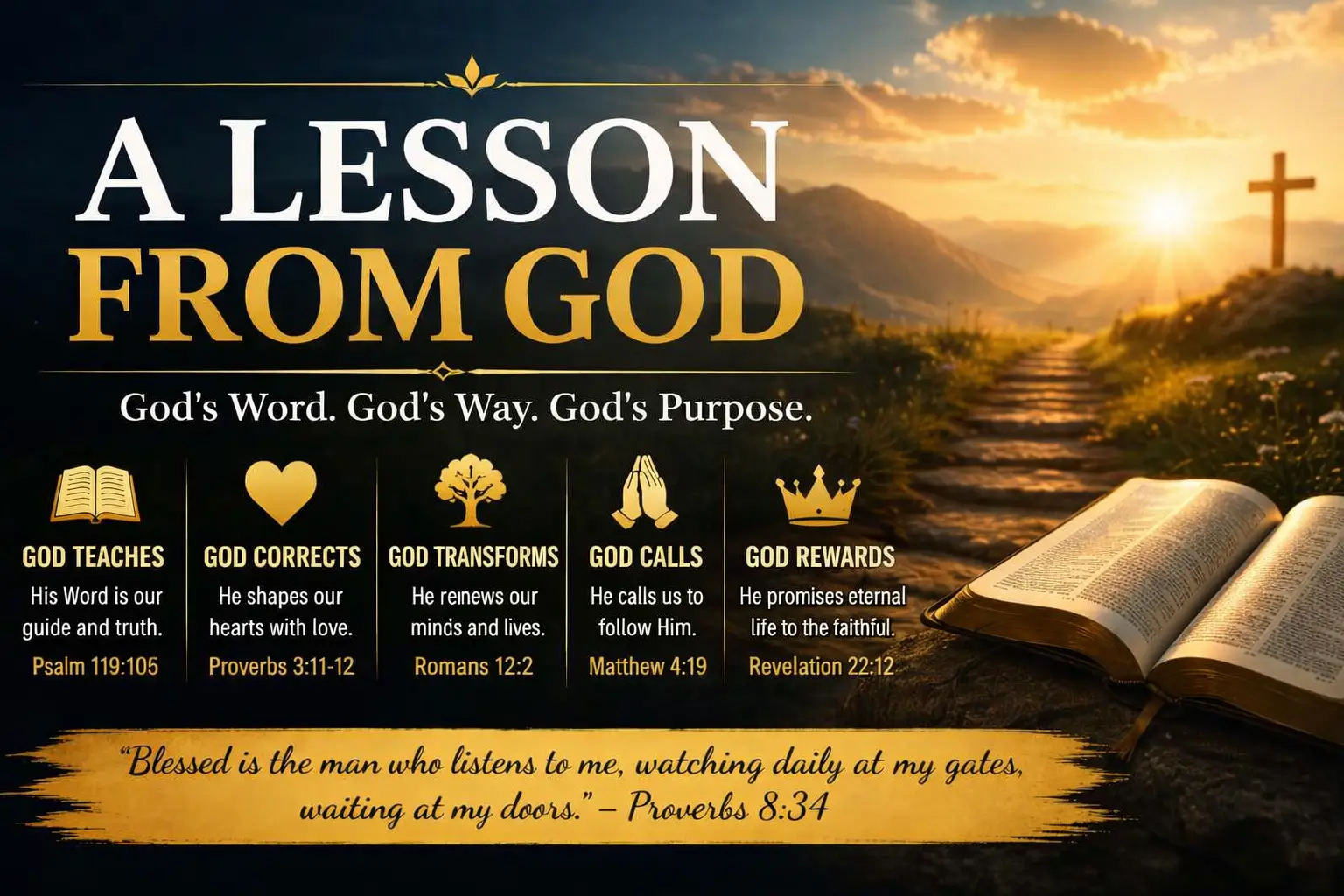
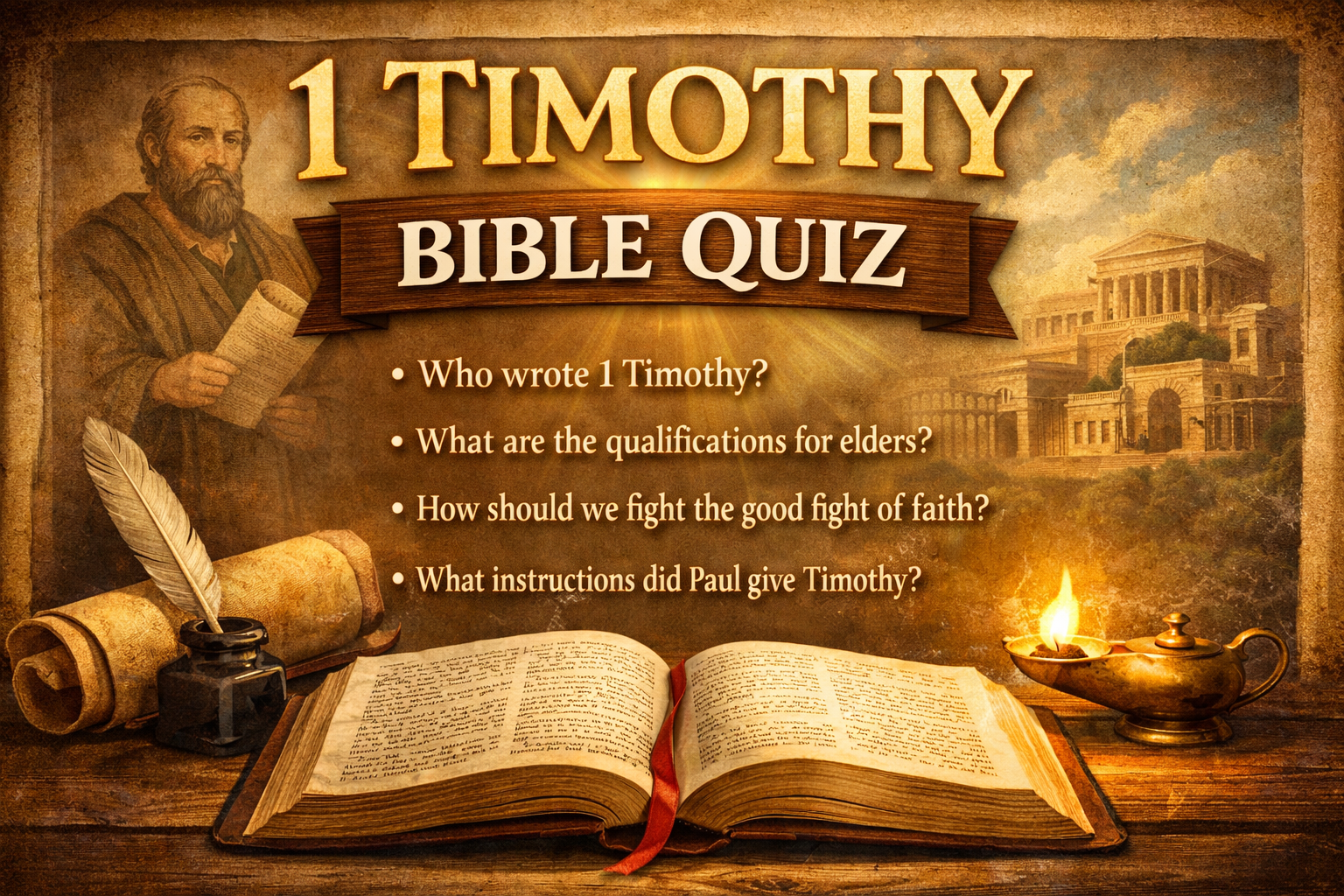
  • What Is the Difference Between Faith and Works in the Bible?

    What Is the Difference Between Faith and Works in the Bible?

    This is such an important topic that 90 percent of Christians do not understand. Because they do not discern the difference between faith and works, their whole religious life is tainted by legalism and religious behavior. What is the difference between faith and works in the Bible?

    A legalist is not converted. A legalist is still lost, just as an atheist is. A legalist is still not accepting the gift of Jesus on the cross. Even if they say, “I understand we are saved by grace,” by the way they talk we can know they do not understand the topic at all.

    What is the difference between faith and works in the Bible? Understanding

    Why is it so important to understand faith and works? Because one cannot go to heaven or be converted if they still believe they can merit heaven and be good enough to go to heaven.

    I was listening to a YouTube channel. It is very good. But after a few videos, I realized the brother does not understand the topic and is still a legalist. Because he said things like we can attain sanctification and stop sinning.

    This is presented in a way that makes the human being able to become holy and to stop sinning. Even if he said that God helps this, he believes that at one point the human being has attained a certain point where, on his own, holiness means he will not sin anymore.

    It is like the misconception of believing sex out of marriage is a sin based on one verse that says

    Mt 5 28 ‘But I say unto you, that whosoever looketh on a woman to lust after her hath committed adultery with her already in his heart.’

    Not understanding that the context is about married people because the word adultery is never used for single people. The same way, mainly one verse wrongly understood makes one a legalist. Which verse is it?

    James 2 24 ‘You see then that a man is justified by works, and not by faith only.’ Does the Bible say here that we are saved by works? No. Most people, like we saw in earlier articles on how to read the Bible correctly, can lose eternal life by not understanding how to read the Bible. What is the difference between faith and works in the Bible? How do we read this verse?

    We read this verse in the context of the rest of the Bible. Jesus says

    Jn 15 5 ‘I am the vine, you are the branches. He who abides in Me, and I in him, bears much fruit; for without Me you can do nothing.’

    If we can do nothing without Jesus, what does it mean? It means even the works cannot be done by us. God does the works through us.

    But people are twisting the meaning of works by thinking that men can merit heaven by working. They believe men can become holy and good and attain sinlessness at a certain point of obedience. This is a very dangerous belief, and it makes men as a god, able to attain holiness and sinlessness. Apart from God, we do not even have inclinations to do good.

    James is not saying we are saved by works. He is saying that if someone has true faith, then the works which are done by God will follow automatically by faith. Righteousness comes by faith; works also come by faith. God does the works through us once we have faith and receive righteousness. What is the difference between faith and works in the Bible?

    If men could work themselves to heaven, then there would be no need of Jesus dying on the cross, as men could attain holiness by his own efforts. Then it would make men a god, who would be able to become a god one day.

    What is the difference between faith and works in the Bible? The meaning of James

    When we read James chapter 2 we realize that James is talking of someone who does not really have faith. Someone that says he has faith and does not love or help others or does not spend time in the Bible and prayer, his faith is vain. It is a false faith.

    It is like a husband saying to his wife, “I love you. You are amazing. I care so much about you,” but never kisses her, never helps, is never kind, never loving, always angry, and abusing her. Is the love of that man real or false? It is a false love, as love would be seen by actions.

    A man would not force himself to love someone. It is automatic. If we love Jesus and ask His righteousness, then as God is working in us, He does the works through us. The prophet Ellen G. White says:

    “He who is trying to reach heaven by his own works in keeping the law, is attempting an impossibility. COR 96.10

    “Man cannot be saved without obedience, but his works should not be of himself; Christ should work in him to will and to do of His good pleasure.” – The Review and Herald, July 1, 1890. COR 97.1

    What is the difference between faith and works in the Bible? No contradiction

    We know God does not lie.

    Titus 1 2 ‘in hope of eternal life which God, who cannot lie, promised before time began,’

    As God cannot lie, we know God cannot say
    The car is blue, then somewhere else say
    The car is red.

    Even human beings who would say different things would be considered liars. Today few people understand the Bible correctly. As when they see what we call apparent contradiction, they say, “Oh well, I will choose one of the two verses.”

    But they do not realize that

    1. It is not for the human being to decide what the Bible says. We are on earth to seek and find the truth. Only honest people will accept the truth.

    God puts apparent contradictions in the Bible so that we study further to understand the meaning. Truth never contradicts itself. When someone believes the Bible teaches two different things and they can choose one of the two verses, it shows their mind is very dishonest.

    They have never understood truth. Truth is absolute like a rock. If God says the car is blue, God will never say the car is red. Apparent contradictions have the purpose of making us study further and for God to reveal those who are honest and dishonest.

    What is the difference between faith and works in the Bible? Not by works

    Ro 11 6 6 ‘And if by grace, then it is no longer of works; otherwise grace is no longer grace. [a] But if it is of works, it is no longer grace; otherwise work is no longer work.’

    The Bible clearly says that we are not saved by works. If we are saved by works then we cannot be saved by faith. If someone is inside a car, he cannot be riding a bicycle at the same time.

    If the light is red, it cannot be green at the same time. If someone is on the water, he cannot be on the sand at the same time. If we are saved by faith alone, then we cannot be saved by works alone at the same time. It is one of the two.

    When James spoke he meant that the works are done by God also, so we can say faith and works are both the result of righteousness by faith. Works also come by faith.

    When we take other verses that talk about works, it is in the meaning of men doing the works. No man can be saved by working to go to heaven. Ellen G. White also says:

    “To subscribe the name to a church creed is not of the least value to anyone if the heart is not truly changed…. Men may be church members, and may apparently work earnestly, performing a round of duties from year to year, and yet be unconverted.” – The Review and Herald, February 14, 1899. COR 83.1

    “While we are incased in self-righteousness, and trust in ceremonies, and depend on rigid rules, we cannot do the work for this time.” – The Review and Herald, May 6, 1890. COR 84.2

    It is such a serious topic that all works-religious people on earth are wicked because they believe they are saved by works. They make rules for others. They believe themselves to be good persons. They see a great holiness in themselves and think highly of their religious life. They do not see their wretchedness and corruption inside. They are blind to their own defects.

    The darkest chapters of history are burdened with the record of crimes committed by bigoted religionists. The Pharisees claimed to be children of Abraham, and boasted of their possession of the oracles of God; yet these advantages did not preserve them from selfishness, malignity, greed for gain, and the basest hypocrisy. They thought themselves the greatest religionists of the world, but their so-called orthodoxy led them to crucify the Lord of glory. COR 79.5

    The worst people on earth who make life a burden for others are religious people. Paul says those who are of works are separated from Jesus. They can be pastors and workers in the church, but they are lost.

    Ga 5 4 ‘For if you are trying to make yourselves right with God by keeping the law, you have been cut off from Christ! You have fallen away from God’s grace.’

    Eph 2 8,9 ‘God saved you by his grace when you believed. And you can’t take credit for this; it is a gift from God. Salvation is not a reward for the good things we have done, so none of us can boast about it..

    Ro 11 6. ‘And since it is through God’s kindness, then it is not by their good works. For in that case, God’s grace would not be what it really is—free and undeserved.’

    Ro 4 2 ‘For if Abraham were justified by works, he hath whereof to glory; but not before God.’

    Ro 9 32 ‘Wherefore? Because they sought it not by faith, but as it were by the works of the law. For they stumbled at that stumblingstone;’

    Ga 2 16 ‘Knowing that a man is not justified by the works of the law, but by the faith of Jesus Christ, even we have believed in Jesus Christ, that we might be justified by the faith of Christ, and not by the works of the law: for by the works of the law shall no flesh be justified.’

    Ti 3 5 ‘Not by works of righteousness which we have done, but according to his mercy he saved us, by the washing of regeneration, and renewing of the Holy Ghost;’

    Repeat father God forgive out sins, give us Your righteousness, help us to understand it is not by works. Give us the desires of our hearts. Prosper us, help us to get along with people. Give us happiness and peace, please, in the name of Jesus. Amen.

  • Ellen G. White Quotes on “Lording It Over” God’s HeritageThe Results of Domination

    Ellen G. White Quotes on “Lording It Over” God’s HeritageThe Results of Domination

    The holy principles that God has given are represented by the sacred fire, but common fire has been used in its place. Plans contrary to truth and righteousness are introduced subtly, on the plea that “this must be done” and “that must be done,” because it is supposedly for the advancement of the cause of God. But it is the devising of men that leads to oppression, injustice, and wickedness. The cause of God must be free from every taint of injustice. It can gain no advantage by robbing the members of the family of God of their individuality or of their rights. All such practices are abhorrent to God.


    The high-handed power that has been developed — as though positions had made men gods — makes me afraid, and ought to cause fear. It is a curse wherever, and by whomsoever, it is exercised. This lording it over God’s heritage will create such a disgust toward man’s jurisdiction that a state of insubordination will result. The people are learning that men in high positions of responsibility cannot be trusted to mold and fashion other men’s minds and characters. The result will be a loss of confidence, even in the management of faithful men.


    The spirit of domination is extending to the presidents of our conferences. If a man is overconfident in his own powers and seeks to exercise dominion over his brethren, feeling that he is invested with authority to make his will the ruling power, the best and only safe course is to remove him — lest great harm be done, he lose his own soul, and imperil the souls of others. “All ye are brethren.” This disposition to lord it over God’s heritage will cause a reaction unless these men change their course. Those in authority should manifest the spirit of Christ. They should deal as He would deal with every case that requires attention.
    They should go forward weighted with the Holy Spirit. A man’s position does not make him one jot or tittle greater in the sight of God; it is character alone that God values.

    — Letter 55, 1895 (September 19, 1895, to O. A. Olsen)
    How the Wheels of Progress Are Clogged
    If it were possible, the enemy would clog the wheels of progress and prevent the truths of the gospel from being circulated everywhere. With this object, he leads men to feel that it is their privilege to control the consciences of their fellow men according to their own perverted ideas. They dismiss the Holy Spirit from their councils, and then, under the power and name of the General Conference, they invent regulations through which they compel men to be ruled by their own ideas and not by the Holy Spirit.


    There is need of education regarding the rights and duties of men in authority who have lorded it over God’s heritage. When a man is placed in a position of trust, not knowing what kind of spirit he should exercise in dealing with human minds, he needs to learn the very first principles concerning his authority over his fellow men. Right principles must be brought into the heart and wrought into the very warp and woof of character.

    — Letter 83, 1896 (May 22, 1896, to O. A. Olsen)
    Satan Fiercely Assails Responsible Men
    Observing carefully every direction the Lord has specified regarding the Christian armor, you will walk before Him softly, and will work discreetly. You will not carry with you any yokes to bind men to your plans, nor will you attempt to make the Lord’s workers amenable to any finite mind. The maxims and precepts of men are not to control His laborers. Let no man be placed in a position where he can lord it over God’s heritage, for this imperils alike the soul of him who rules and the souls of those who are under his rule.

    — Manuscript 140, 1902 (November 6, 1902, “Principles for the Guidance of Men in Positions of Responsibility”)
    No Commanding
    Among the Lord’s servants there is to be no commanding. No yokes are to be placed on the necks of God’s blood-bought heritage. Every yoke is to be broken. Men and women are more precious in the sight of God than the human mind can estimate. Christ understands their value, for He sacrificed Himself for their redemption. We are His property, the purchase of His life-blood. Sign not away your allegiance to any human jurisdiction or power. “Ye are not your own; for ye are bought with a price: therefore glorify God in your body, and in your spirit, which are God’s” (1 Corinthians 6:19–20).

    — Ibid.
    Exalted Idea of Position Dangerous
    Sometimes a man placed in responsibility as a leader gains the idea that he is in a position of supreme authority, and that all of his brethren, before making advance moves, must first come to him for permission to do what they feel should be done. Such a man is in a dangerous position. He has lost sight of the work of a true leader among God’s people. Instead of acting as a wise counselor, he assumes the prerogatives of an exacting ruler.


    God is dishonored by every such display of authority and self-exaltation. No man standing in his own strength is ever to be the mind and judgment for another man whom the Lord is using in His work. No one is to lay down man-made rules and regulations to arbitrarily govern his fellow laborers who have a living experience in the truth.

    — Testimonies to Ministers and Gospel Workers, p. 491
    Leadership Is Not Lordship
    No man is ever to set himself up as a ruler, as a lord over his fellow men, to act out his natural impulses. No one man’s voice and influence should ever be allowed to become a controlling power.
    I am instructed by the Lord to say that position never gives a man grace or makes him righteous. “The fear of the Lord is the beginning of wisdom.” Some men entrusted with positions of responsibility entertain the idea that position exists for the aggrandizement of self.

    — Medical Ministry, pp. 164–165
    Not to Judge or Rule
    It is dangerous work to invest men with authority to judge and rule their fellow men. Power has not been given to you, nor to any other man, to control the actions of God’s people, and the effort to do this must no longer continue. God has been dishonored by the education given to the churches in Southern California in looking to one man as conscience and judgment for them. God has never authorized any man to exercise ruling power over his fellow workers, and those who have allowed a dictatorial spirit to enter their official work need to experience the converting power of God upon their hearts. They have placed man where God should be.

    — Letter 290, 1907, pp. 2–3 (August 29, 1907)
    The Conference President and Authority
    It is a mistake for a conference to select as president one who considers that his office places unlimited power in his hands. The Lord has instructed me to tell you that you do not know when to use authority and when to refrain from using it unwisely. You have much to learn before you can do the work of a conference president intelligently. You are to bear in mind that in the cause of God there is a chief Director, whose power and wisdom is above that of human minds.


    God will have nothing to do with methods of working where finite men are allowed to bear rule over their fellow men. He calls for a decided change to be made. The voice of command must no longer be heard. The Lord has, among His workers, men of humility and discretion; from these should be chosen men who will conduct the work in the fear of God. It would be well if Elder Cottrell and at least one other worker of broad experience should be called upon to consult together and consider your plans affecting the medical work. God designs that His servants shall carry the responsibilities of that conference in a spirit of humility and dependence upon Him.

    — Letter 290, 1907, pp. 2–3 (August 29, 1907, to George W. Reaser)
    Device to Oppress Men God Will Not Vindicate
    God will not vindicate any device whereby man shall, in the slightest degree, rule or oppress his fellow men. The only hope for fallen man is to look to Jesus and receive Him as the only Saviour. As soon as a man begins to make any iron rule for other men, as soon as he begins to harness up and drive men according to his own mind, he dishonors God and imperils his own soul and the souls of his brethren.


    Sinful man can find hope and righteousness only in God, and no human being is righteous any longer than he has faith in God and maintains a vital connection with Him. A flower of the field must have its roots in the soil; it must have air, dew, showers, and sunshine. It will flourish only as it receives these advantages, and all are from God. So with men — we receive from God that which ministers to the life of the soul. We are warned not to trust in man, not to make flesh our arm.

    — Testimonies to Ministers and Gospel Workers, pp. 366–367
    The Conference President
    Again and again I repeat the warning: never place as president of a conference a man who supposes that such a position gives him the power to dictate and control the consciences of others. It is natural for man to have a large estimate of self; old habits wrestle for supremacy. But the man who occupies a position of trust should not glorify himself.


    The worker who daily subordinates his will to the will of Christ will be educated away from such an idea. He will practice the virtues of Christ’s character in all meekness and lowliness of mind, and this will give those whom his ministry is supposed to benefit the precious freedom of the liberty of the children of God. They will be free to act out the grace bestowed upon them, so that all may understand the precious privileges the saints possess as members of the body of Christ.


    The one entrusted with sacred responsibilities should ever show forth the meekness and wisdom of Christ, for it is thus that he becomes a representative of Christ’s character and methods. Never should he usurp authority, or command or threaten, saying, “Unless you do as I say, you will receive no pay from the conference.” A man who would speak such words is out of his place as president of a conference. He would make men slaves to his judgment.

    — Letter 416, 1907, pp. 5–6 (December 30, 1907, to A. G. Daniells and W. C. White)
    Remove the Dictator
    The spirit of domination is extending to the presidents of our conferences. If a man is overconfident in his own powers and seeks to exercise dominion over his brethren, feeling that he is invested with authority to make his will the ruling power, the best and only safe course is to remove him — lest great harm be done, he lose his own soul, and imperil the souls of others. “All ye are brethren.” This disposition to lord it over God’s heritage will cause a reaction unless these men change their course. Those in authority should manifest the spirit of Christ. They should deal as He would deal with every case that requires attention.

    — Testimonies to Ministers and Gospel Workers, p. 362
    A Closing Reflection
    At the time of the first advent of Christ, the men who composed the Sanhedrin exercised their authority by controlling others according to their own will. Thus, the very souls whom Christ had given His life to free from the bondage of Satan were brought under bondage to men in another form.


    Do we, individually, realize our true position — that as God’s hired servants, we are not to bargain away our stewardship? We have an individual accountability before the heavenly universe to administer the trust committed to us by God. Our own hearts are to be stirred. Our hands are to have something to impart of the income that God entrusts to us. The humblest among us may be agents for God, using our gifts for His name’s glory. He who improves his talents to the best of his ability may present to God his offering as a consecrated gift, as fragrant incense before Him. It is the duty of everyone to see that his talents are turned to advantage as a gift he must return, having done his best to improve it.


    The spirit of domination is extending to the presidents of our conferences. If a man is overconfident in his own powers and seeks to exercise dominion over his brethren, feeling that he is invested with authority to make his will the ruling power, the best and only safe course is to remove him — lest great harm be done, he lose his own soul, and imperil the souls of others. “All ye are brethren.” This disposition to lord it over God’s heritage will cause a reaction unless these men change their course.


    Those in authority should manifest the spirit of Christ. They should deal as He would deal with every case that requires attention. They should go forward weighted with the Holy Spirit. A man’s position does not make him one jot or tittle greater in the sight of God; it is character alone that God values.
    The goodness, mercy, and love of God were proclaimed by Christ to Moses. This was God’s character. When men who profess to serve God ignore His parental character and depart from honor and righteousness in dealing with their fellow men, Satan exults, for he has inspired them with his own attributes. They are following in the track of Romanism.